The Core of Innovation
Chemical Section
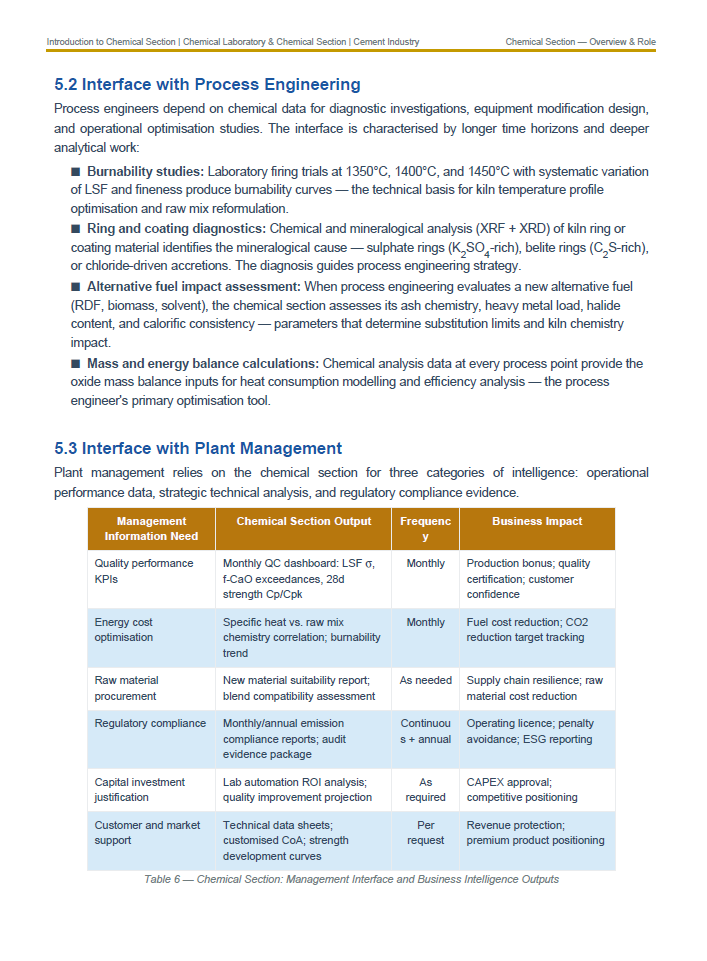
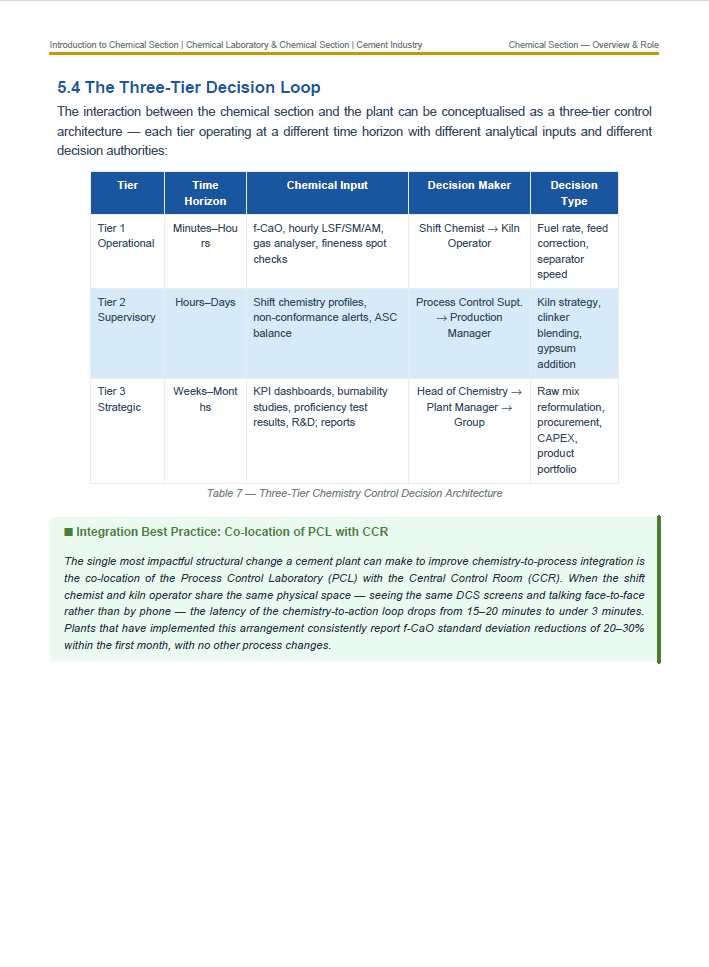
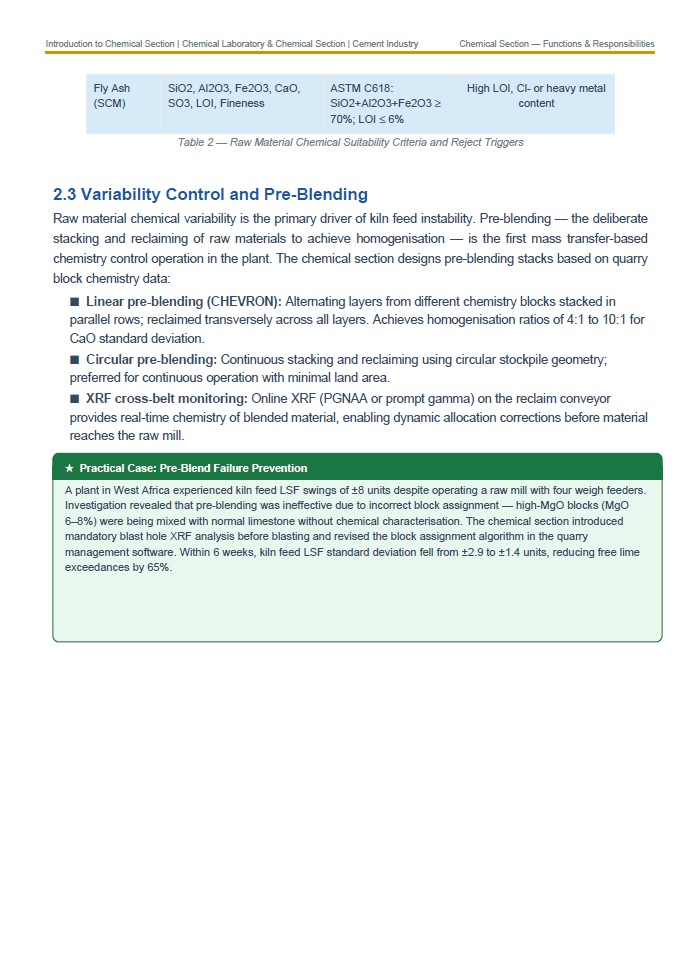
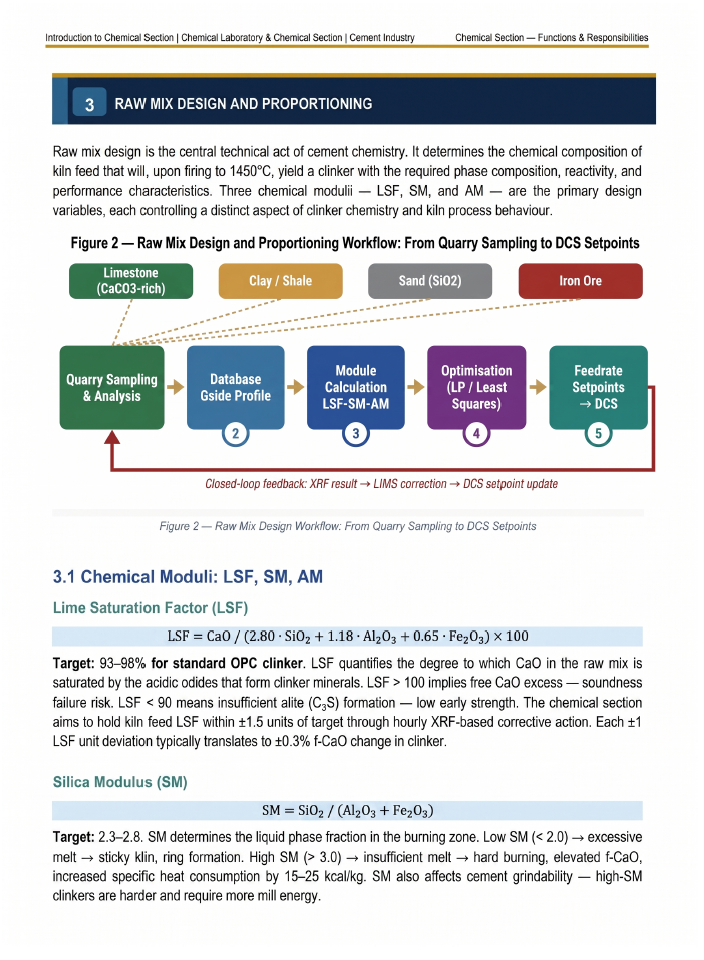
Every monumental structure ever built began at the molecular level. Here, we decode the alchemy of strength, the chemistry of endurance, and the rigorous standards that hold the modern world together.
INTRODUCTION TO THE CHEMICAL SECTION IN THE CEMENT INDUSTRY
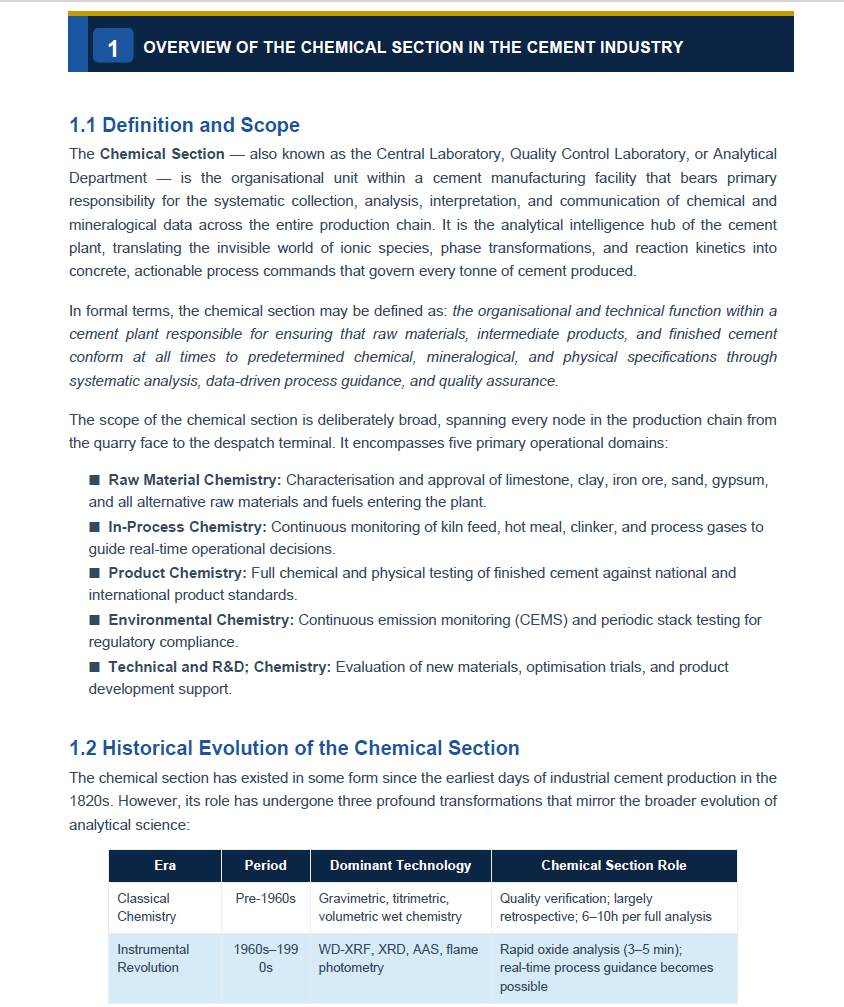
OVERVIEW OF THE CHEMICAL SECTION IN THE CEMENT INDUSTRY
Key Concepts
Analytical Backbone: The chemical section is the brain of the cement plant, converting chemical data into process decisions.
Quality Assurance Role: Ensures all raw materials, intermediate products, and final cement meet required specifications.
End-to-End Coverage: Involved from quarry to dispatch—raw materials, process control, product testing, environment, and R&D.
Real-Time Process Control: Supports continuous monitoring and immediate operational adjustments.
Technological Evolution: Shifted from slow wet chemistry to advanced instruments, automation, and AI-driven systems.
Automation & Digitalization: Uses XRF, online analyzers, LIMS, and robotic labs for fast and accurate results.
Strategic Importance: Not just a support function—it directly impacts plant performance and stability.
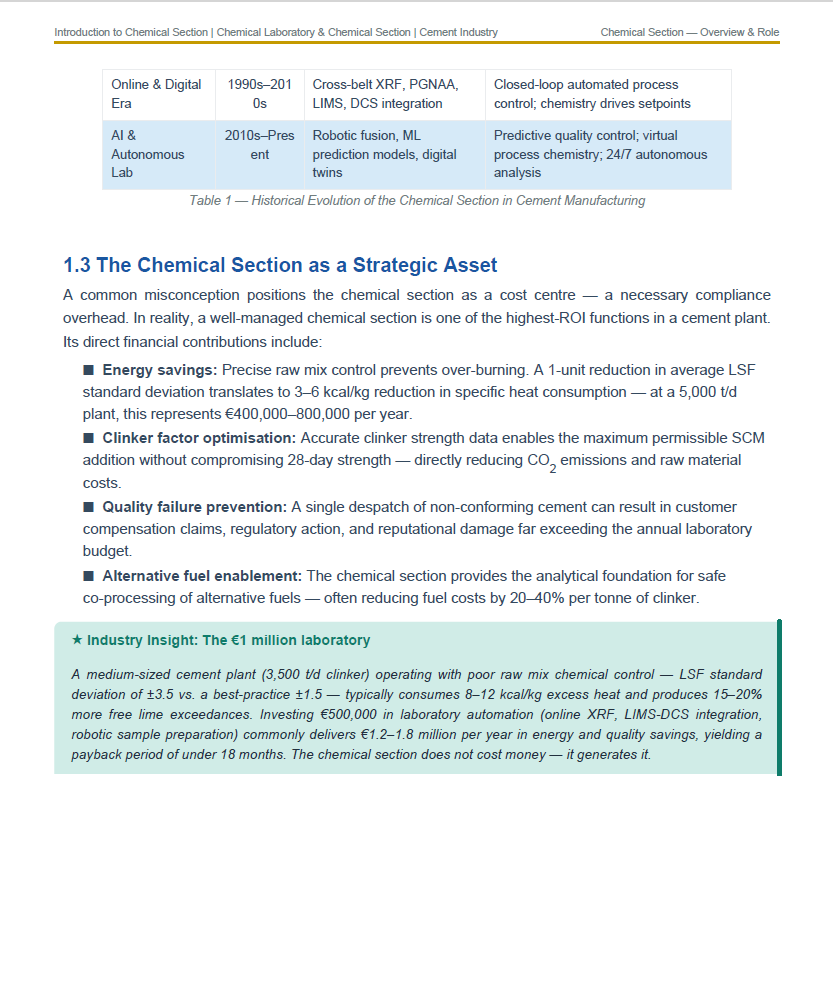
Profit Driver: Reduces energy consumption, optimizes clinker factor, enables alternative fuels, and prevents quality failures.
High ROI Function: Investments in lab automation deliver significant cost savings with quick payback.
Future-Oriented: Moving toward predictive quality control and autonomous laboratory systems.
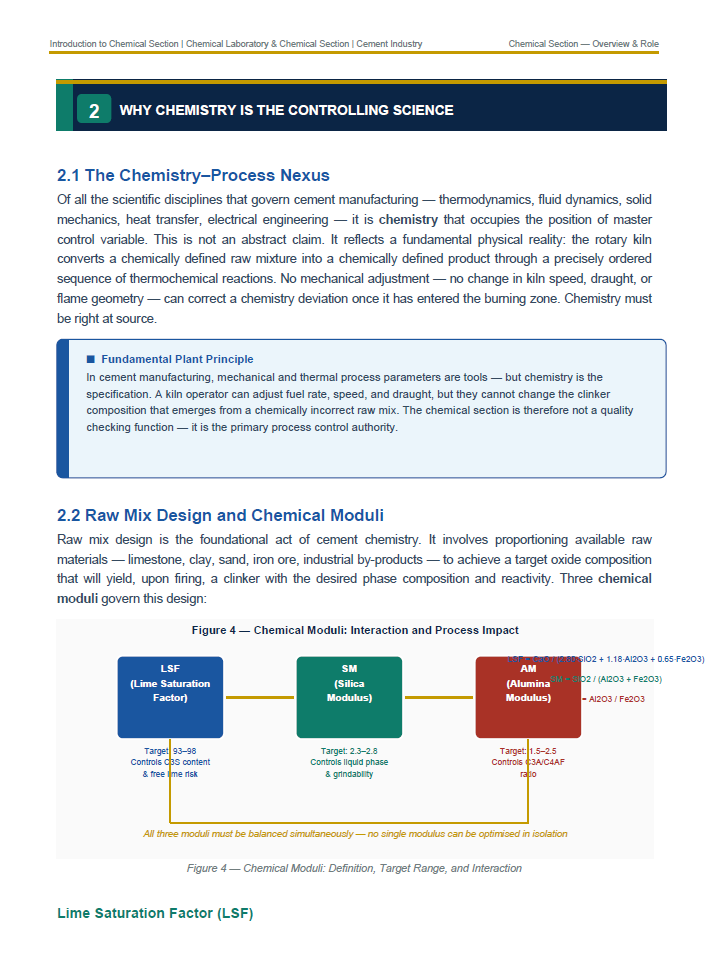
WHY CHEMISTRY IS THE CONTROLLING SCIENCE
Key Concepts
Chemistry controls the process — it is the main driver of clinker quality.
Raw mix design is critical — correct proportions define final output.
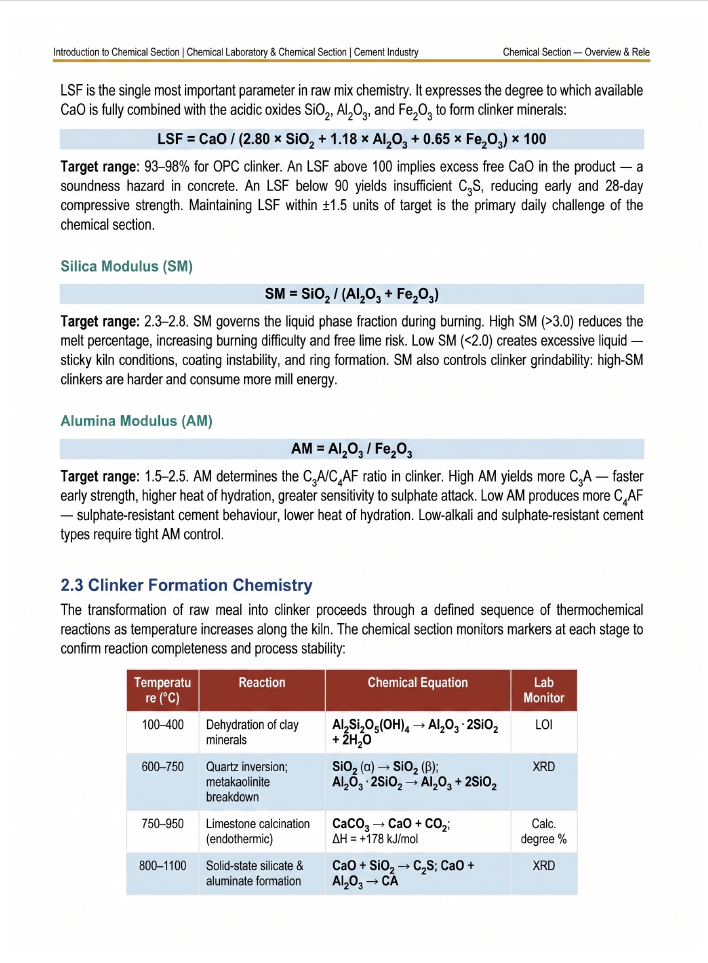
Three key moduli: LSF, SM, AM — must be balanced together.
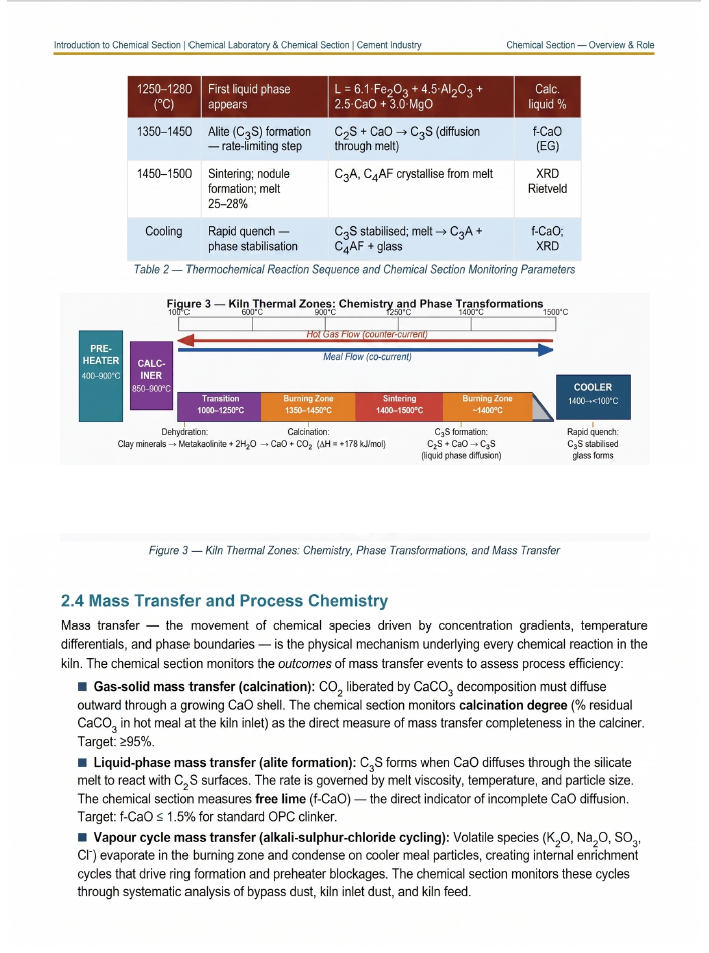
Clinker forms in stages — driven by temperature and reactions in the kiln.
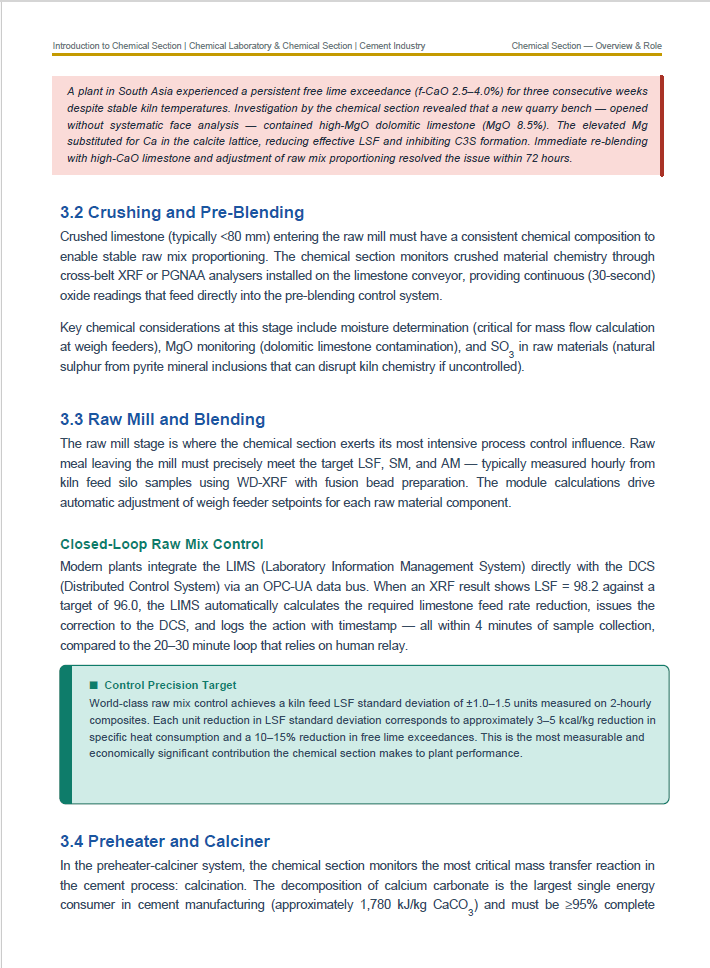
Mass transfer matters — controls reaction efficiency and clinker formation.
Key control parameters: f-CaO, LOI, SM, LSF, AM.
Volatile cycles impact operation — can cause rings and blockages.
Preheater improves efficiency — monitored through chemical indicators.
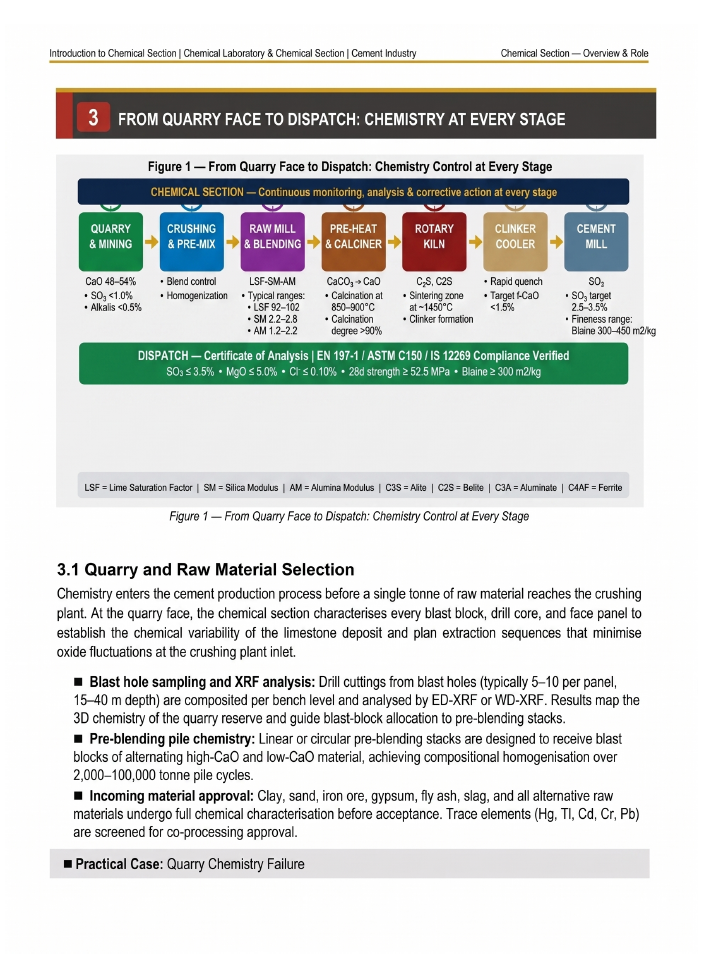
FROM QUARRY FACE TO DISPATCH: CHEMISTRY AT EVERY STAGE
Key Concepts
Role of the Chemical Section as the core of quality control in cement plants
How chemistry governs the entire cement manufacturing process
Understanding of laboratory design and functional layout for efficient workflow
Importance of zoning (R&D, weighing, storage, testing areas) in lab operations
Concept of sample flow: collection → preparation → analysis → reporting
Significance of precision weighing and controlled environments (balance room)
Best practices for chemical storage, safety, and handling systems
Fundamentals of waste disposal and environmental compliance in labs
Role of data management systems (LIMS) in modern laboratories
Integration of lab results with process control and plant optimization
How proper lab infrastructure improves accuracy, consistency, and decision-making
Understanding of a typical cement laboratory layout and workflow optimization
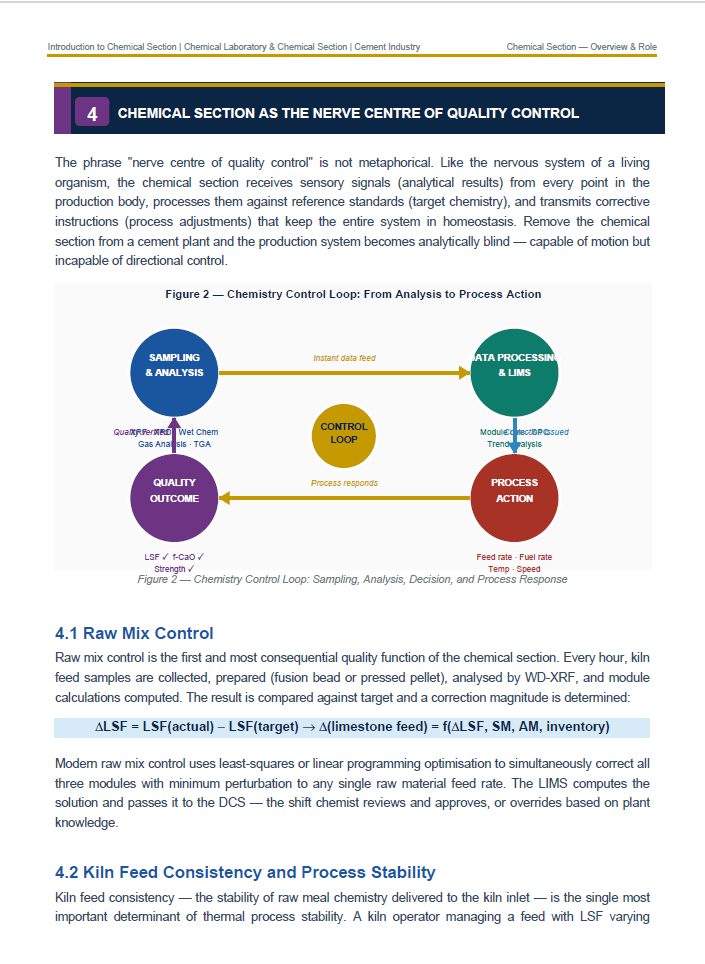
CHEMICAL SECTION AS THE NERVE CENTRE OF QUALITY CONTROL
Key Concepts
Importance of controlled laboratory environment for accurate cement analysis
Role of temperature and humidity control in maintaining instrument stability and sample integrity
Need for vibration isolation to ensure precision in sensitive equipment like balances and XRF
Significance of a dust-free environment in cement labs to avoid contamination and errors
Function of proper ventilation and fume extraction systems for safety and chemical handling
Impact of adequate lighting on precision work and error reduction
Importance of stable power supply (UPS & voltage control) for uninterrupted and reliable testing
Role of compressed gases (Argon, Helium, Nitrogen) in analytical instruments
Types and applications of water systems (distilled, deionized, tap) in laboratory processes
Need for proper drainage and chemical waste handling to ensure safety and environmental compliance
How environmental control improves data accuracy, repeatability, and process reliability
Link between lab conditions and overall plant quality control and performance
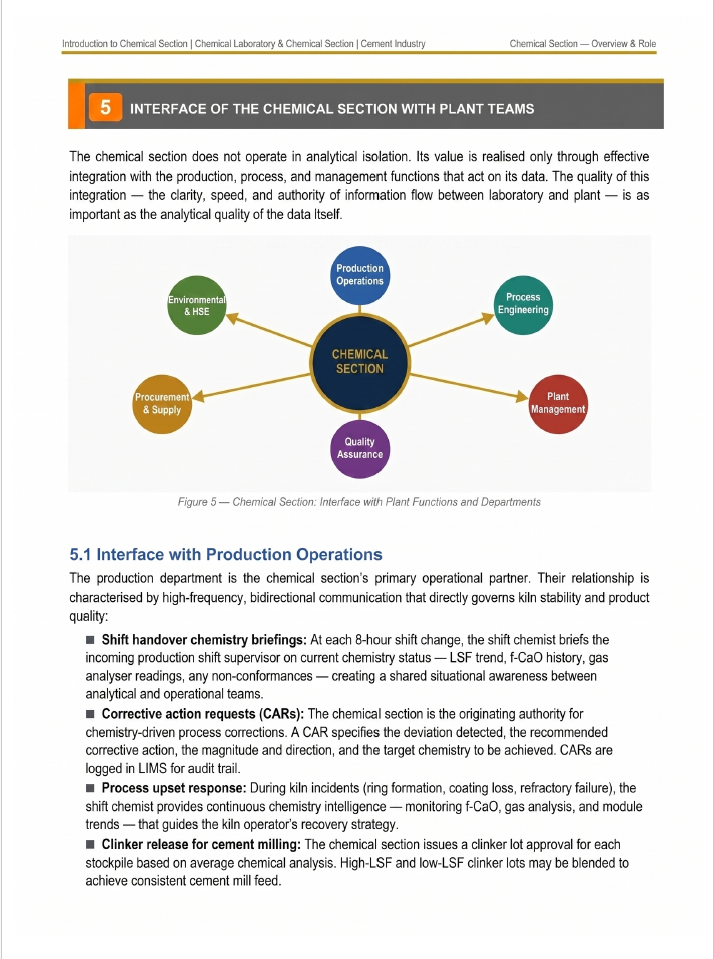
INTERFACE OF THE CHEMICAL SECTION WITH PLANT TEAMS
Key Concepts
Importance of laboratory design and layout in ensuring efficient workflow and accuracy
Role of a dedicated Research & Development (R&D) area in innovation and product improvement
Need for a controlled balance (weighing) room for high-precision measurements
Best practices for chemical storage and reagent management (safety, compatibility, labeling)
Importance of a proper washing and waste disposal system for lab hygiene and environmental compliance
Role of office and data management systems (LIMS) in reporting, tracking, and decision-making
Concept of functional zoning within a cement laboratory
Understanding of sample flow: collection → preparation → analysis → reporting
Importance of safety, ergonomics, and contamination control in lab operations
How proper layout improves efficiency, accuracy, and turnaround time
Link between lab infrastructure and process control & cement quality consistency
FUNCTIONS AND RESPONSIBILITIES OF THE CHEMICAL SECTION
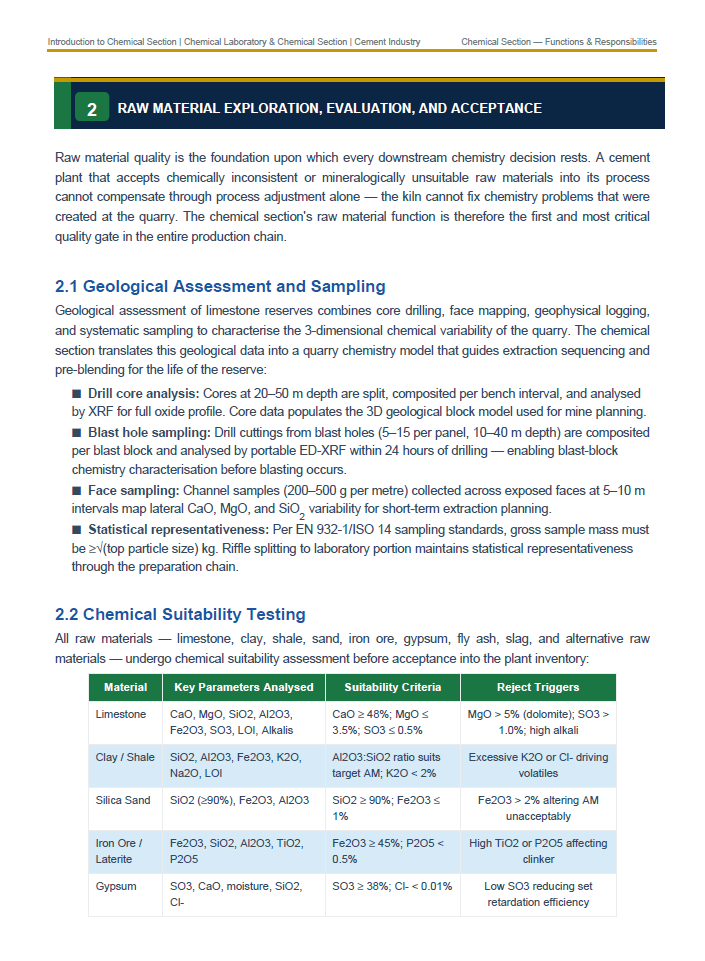
RAW MATERIAL EXPLORATION, EVALUATION, AND ACCEPTANCE
Key Concepts
Analytical Backbone: The chemical section is the brain of the cement plant, converting chemical data into process decisions.
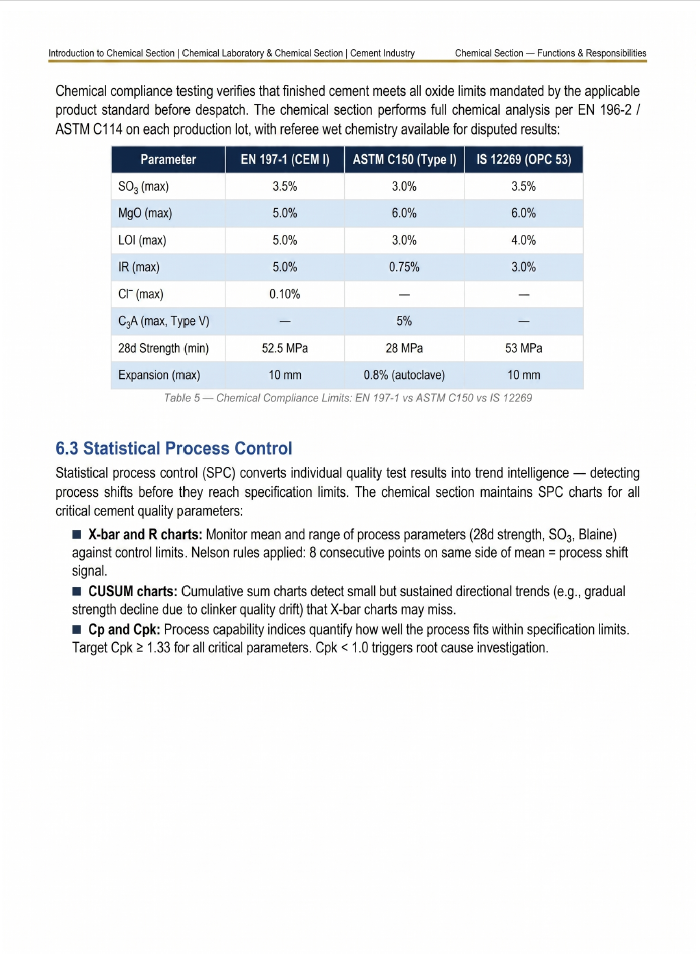
Quality Assurance Role: Ensures all raw materials, intermediate products, and final cement meet required specifications.
End-to-End Coverage: Involved from quarry to dispatch—raw materials, process control, product testing, environment, and R&D.
Real-Time Process Control: Supports continuous monitoring and immediate operational adjustments.
Technological Evolution: Shifted from slow wet chemistry to advanced instruments, automation, and AI-driven systems.
Automation & Digitalization: Uses XRF, online analyzers, LIMS, and robotic labs for fast and accurate results.
Strategic Importance: Not just a support function—it directly impacts plant performance and stability.
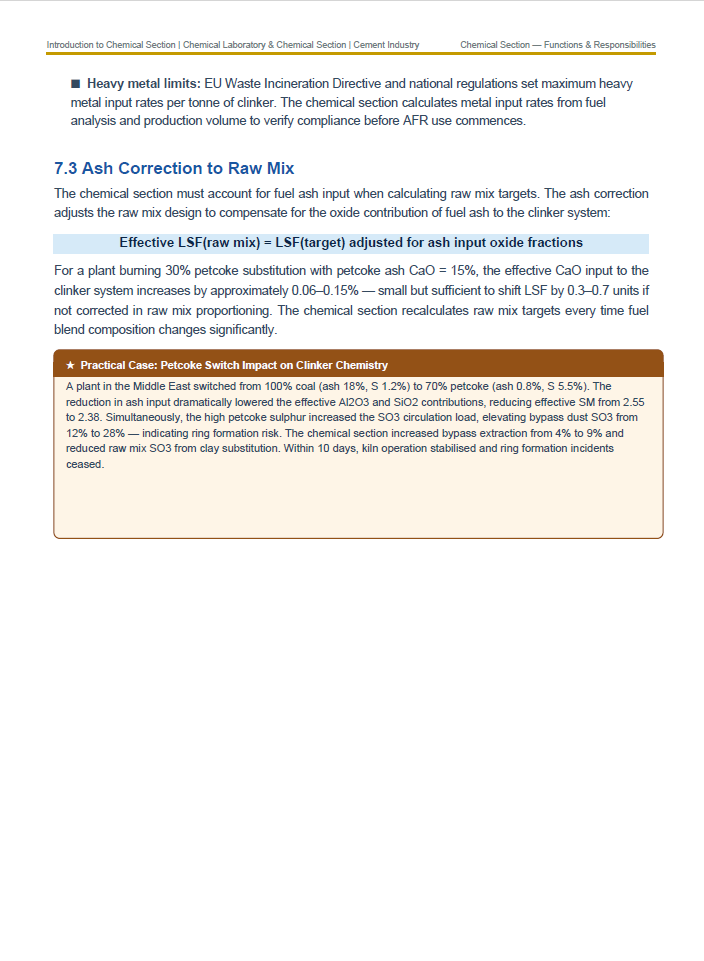
Profit Driver: Reduces energy consumption, optimizes clinker factor, enables alternative fuels, and prevents quality failures.
High ROI Function: Investments in lab automation deliver significant cost savings with quick payback.
Future-Oriented: Moving toward predictive quality control and autonomous laboratory systems.
RAW MIX DESIGN AND PROPORTIONING
Key Concepts
Chemistry controls the process — it is the main driver of clinker quality.
Raw mix design is critical — correct proportions define final output.
Three key moduli: LSF, SM, AM — must be balanced together.
Clinker forms in stages — driven by temperature and reactions in the kiln.
Mass transfer matters — controls reaction efficiency and clinker formation.
Key control parameters: f-CaO, LOI, SM, LSF, AM.
Volatile cycles impact operation — can cause rings and blockages.
Preheater improves efficiency — monitored through chemical indicators.
PROCESS CONTROL AND OPTIMISATION
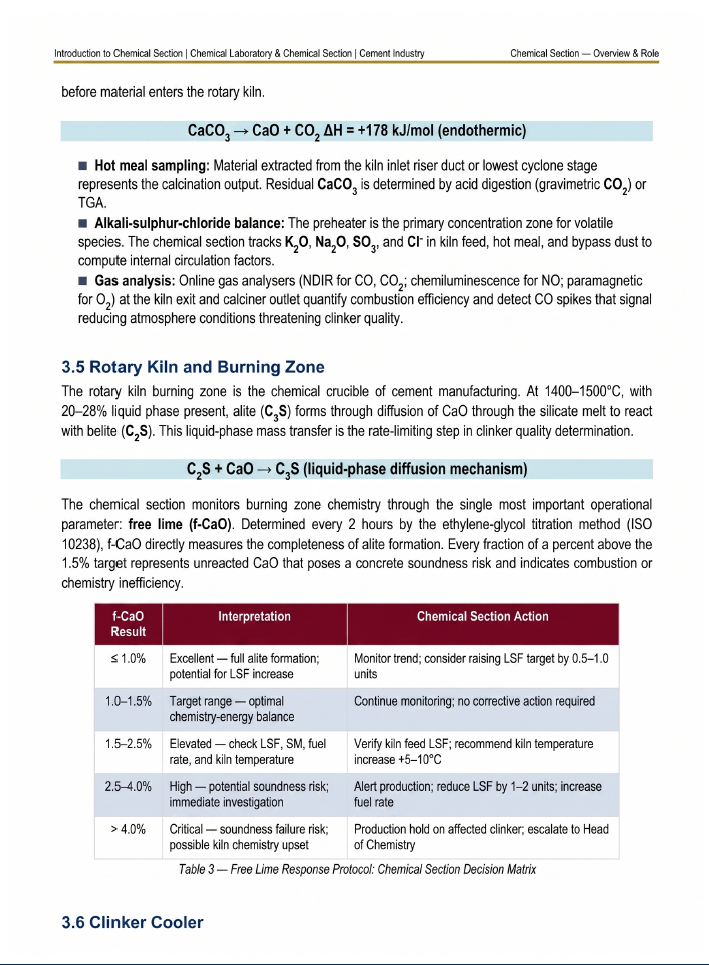
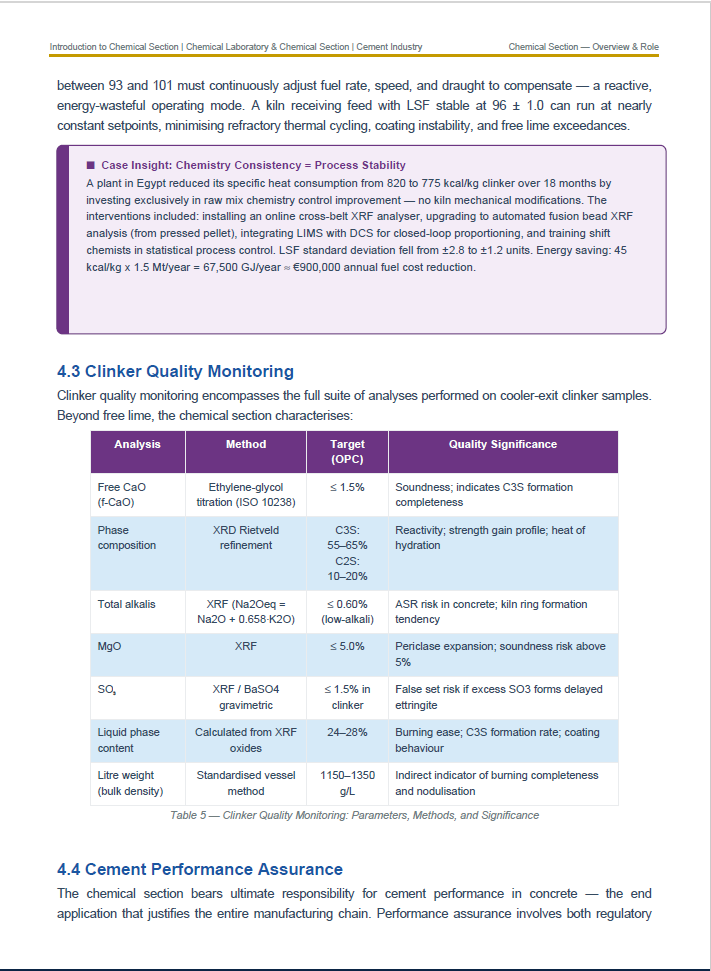
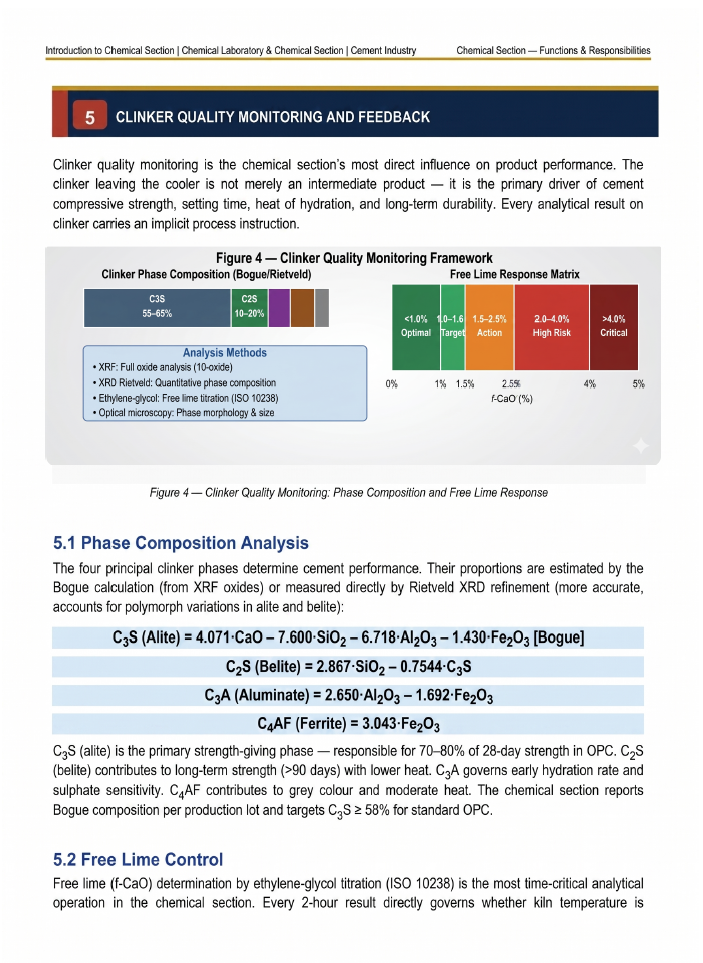
CLINKER QUALITY MONITORING AND FEEDBACK
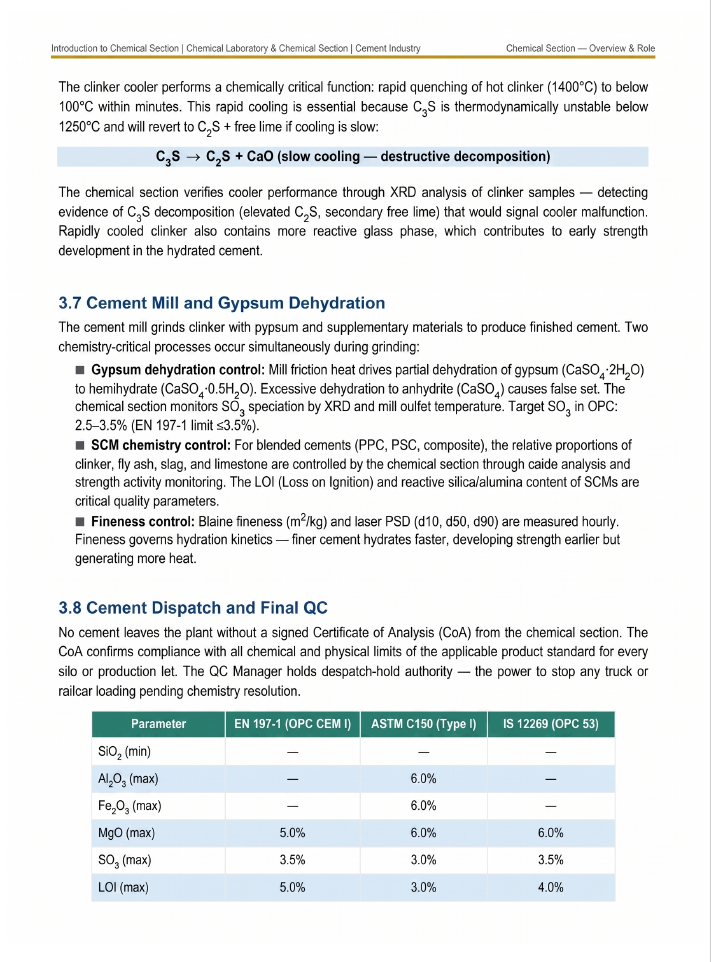
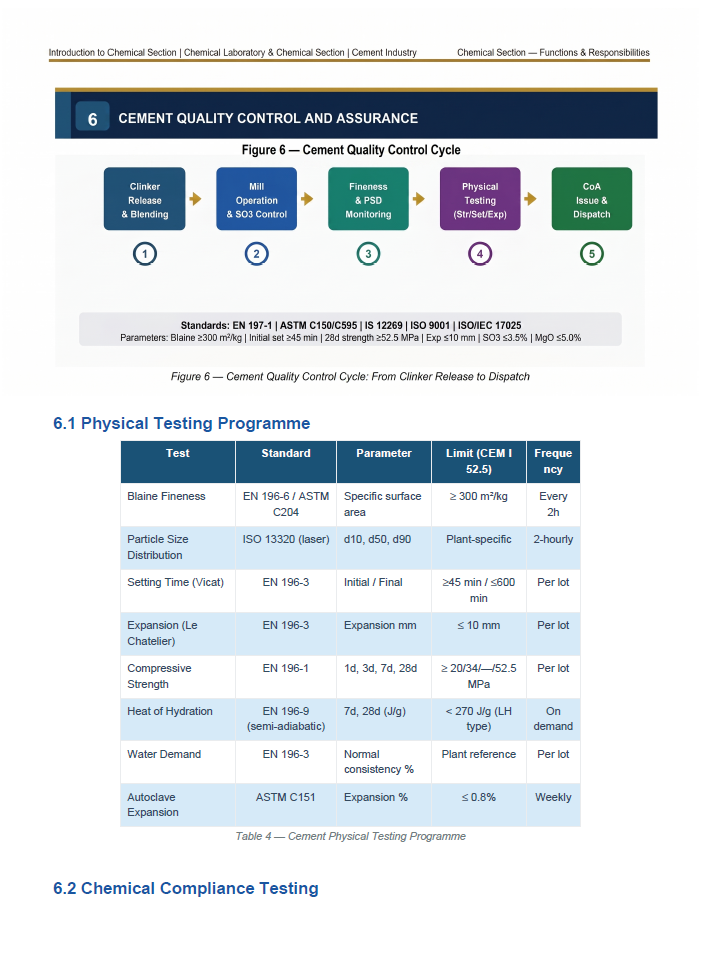
CEMENT QUALITY CONTROL AND ASSURANCE
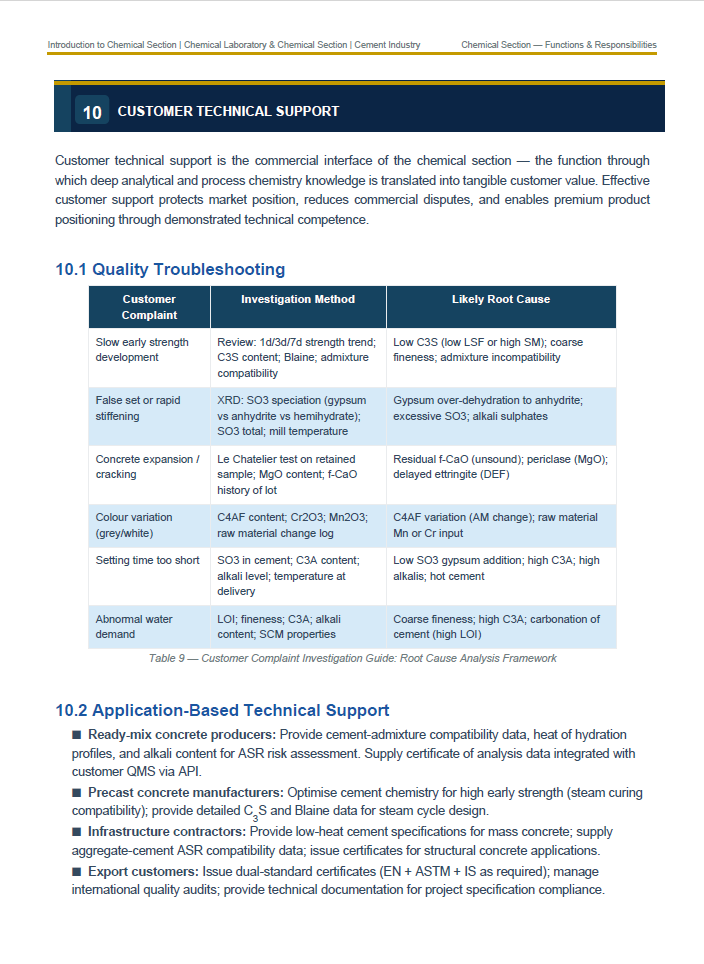
FUEL QUALITY MONITORING
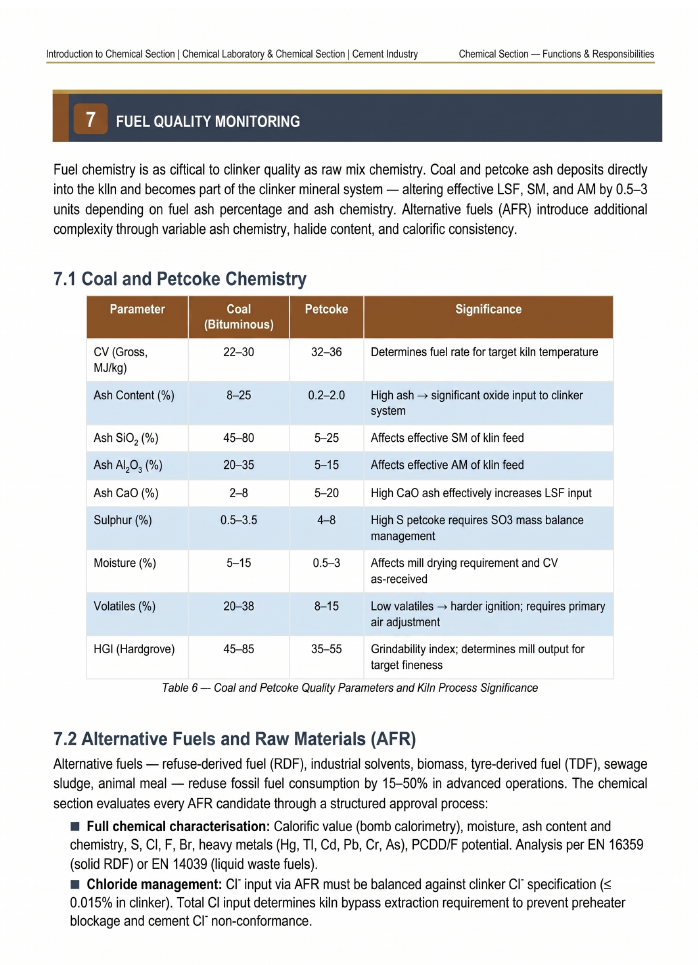
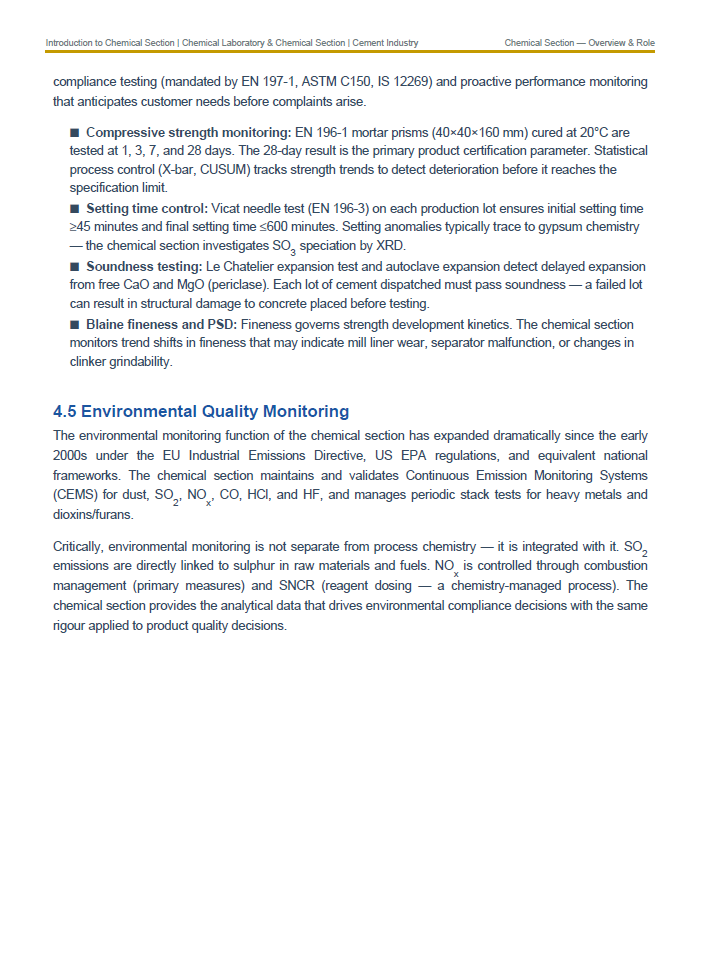
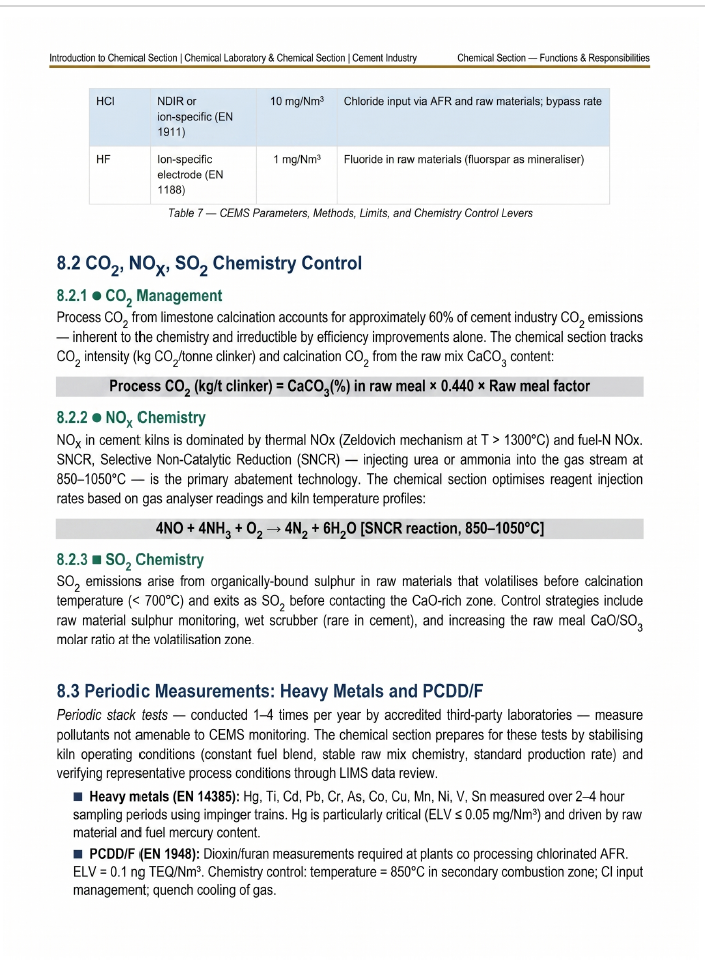
ENVIRONMENTAL MONITORING AND COMPLIANCE
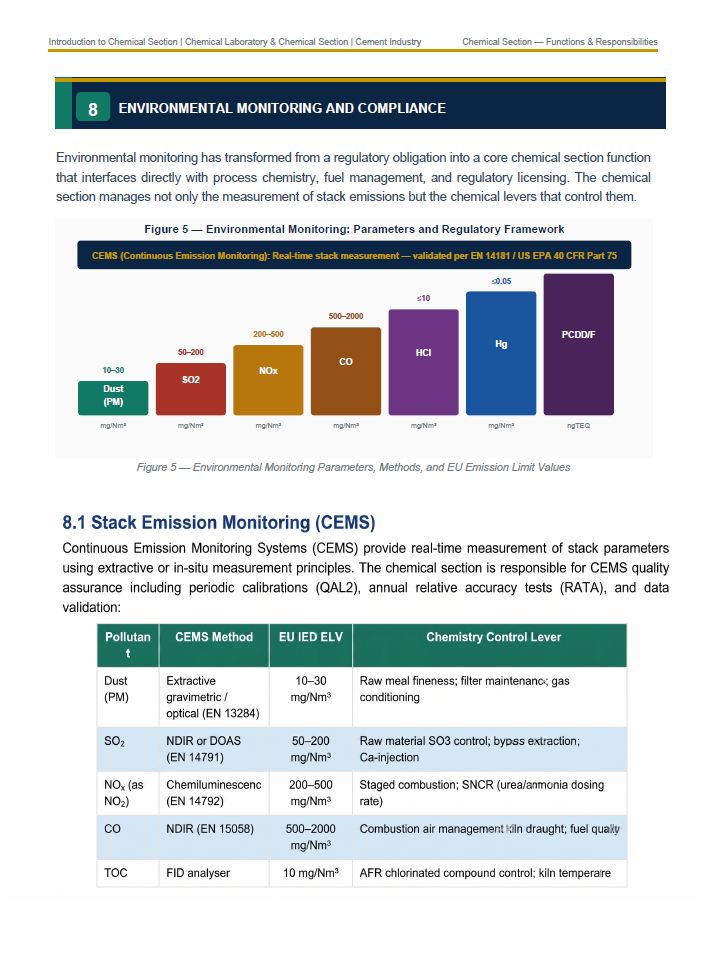
RESEARCH, DEVELOPMENT, AND NEW PRODUCT INTRODUCTION
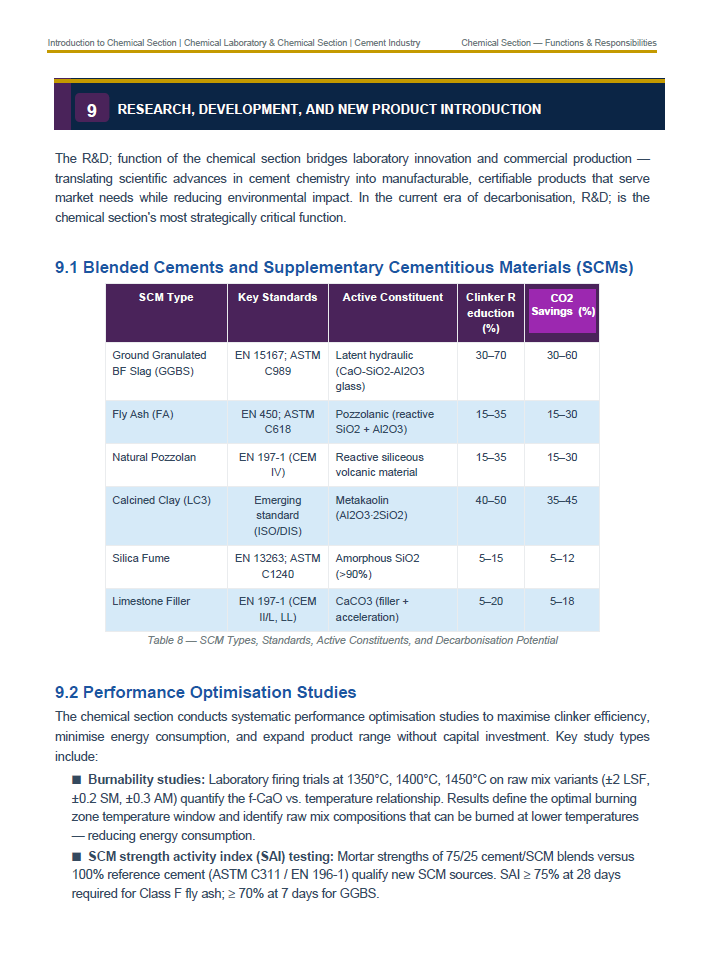
CUSTOMER TECHNICAL SUPPORT
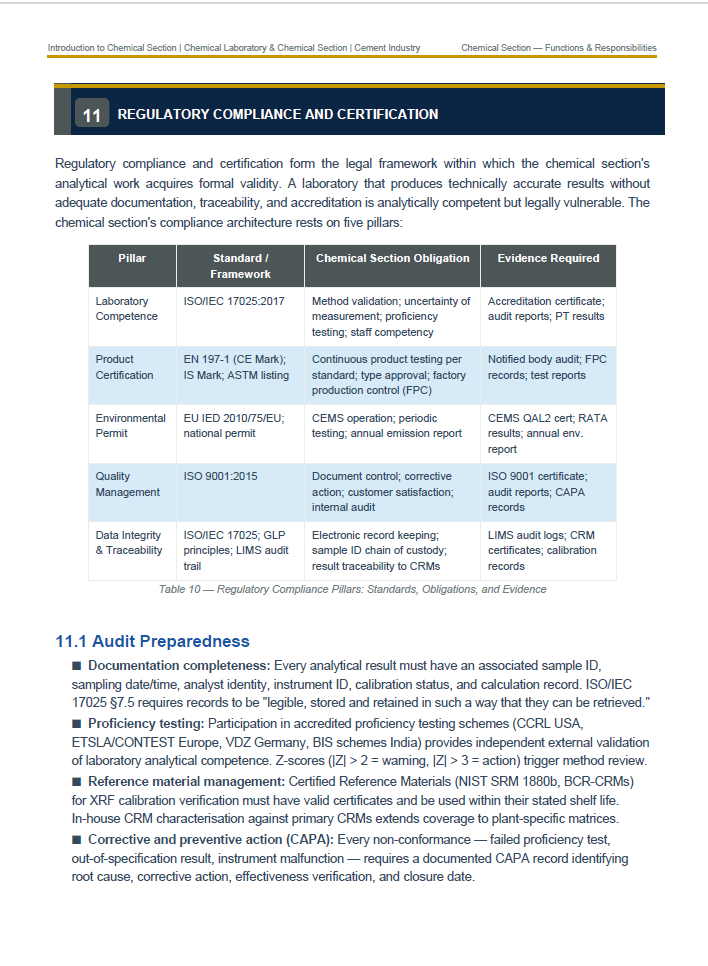
REGULATORY COMPLIANCE AND CERTIFICATION
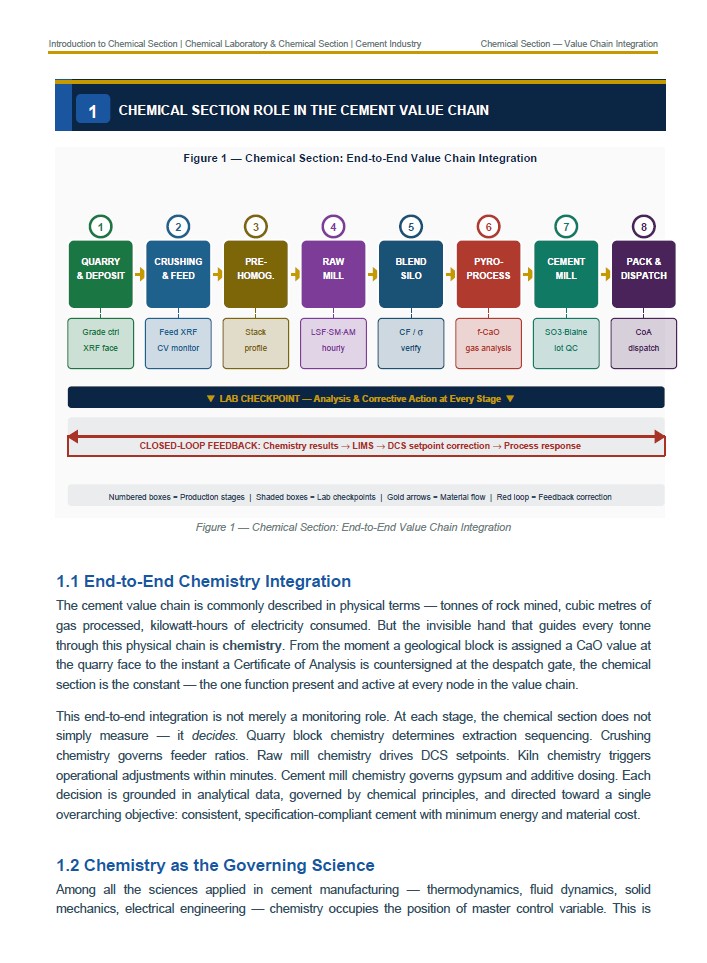
THE CHEMICAL SECTION IN THE CEMENT VALUE CHAIN
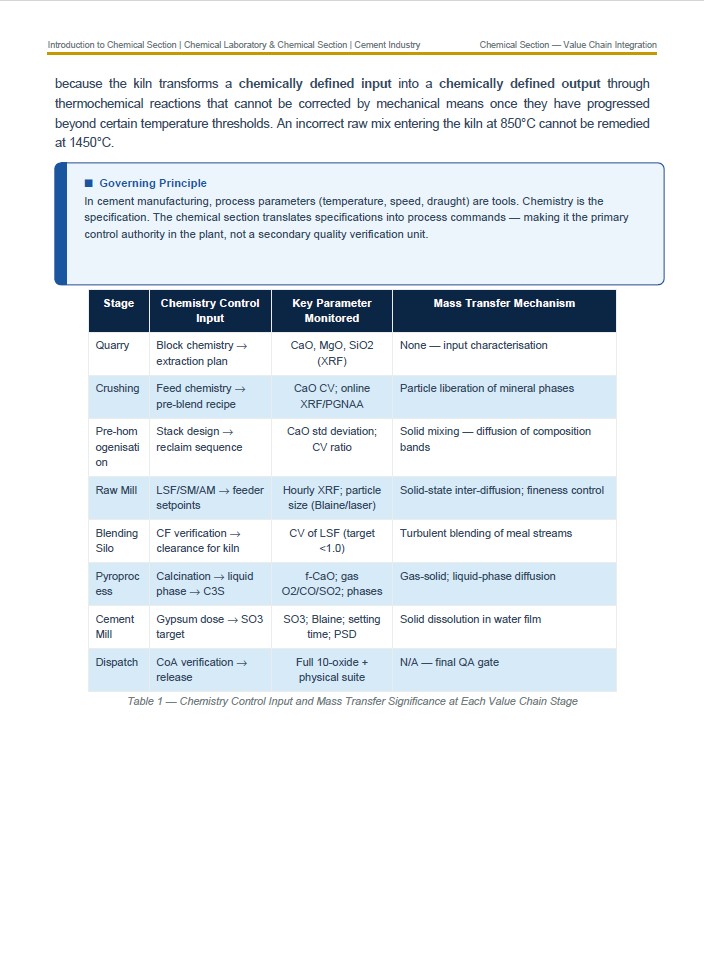
CHEMICAL SECTION ROLE IN THE CEMENT VALUE CHAIN
Key Concepts
Analytical Backbone: The chemical section is the brain of the cement plant, converting chemical data into process decisions.
Quality Assurance Role: Ensures all raw materials, intermediate products, and final cement meet required specifications.
End-to-End Coverage: Involved from quarry to dispatch—raw materials, process control, product testing, environment, and R&D.
Real-Time Process Control: Supports continuous monitoring and immediate operational adjustments.
Technological Evolution: Shifted from slow wet chemistry to advanced instruments, automation, and AI-driven systems.
Automation & Digitalization: Uses XRF, online analyzers, LIMS, and robotic labs for fast and accurate results.
Strategic Importance: Not just a support function—it directly impacts plant performance and stability.
Profit Driver: Reduces energy consumption, optimizes clinker factor, enables alternative fuels, and prevents quality failures.
High ROI Function: Investments in lab automation deliver significant cost savings with quick payback.
Future-Oriented: Moving toward predictive quality control and autonomous laboratory systems.
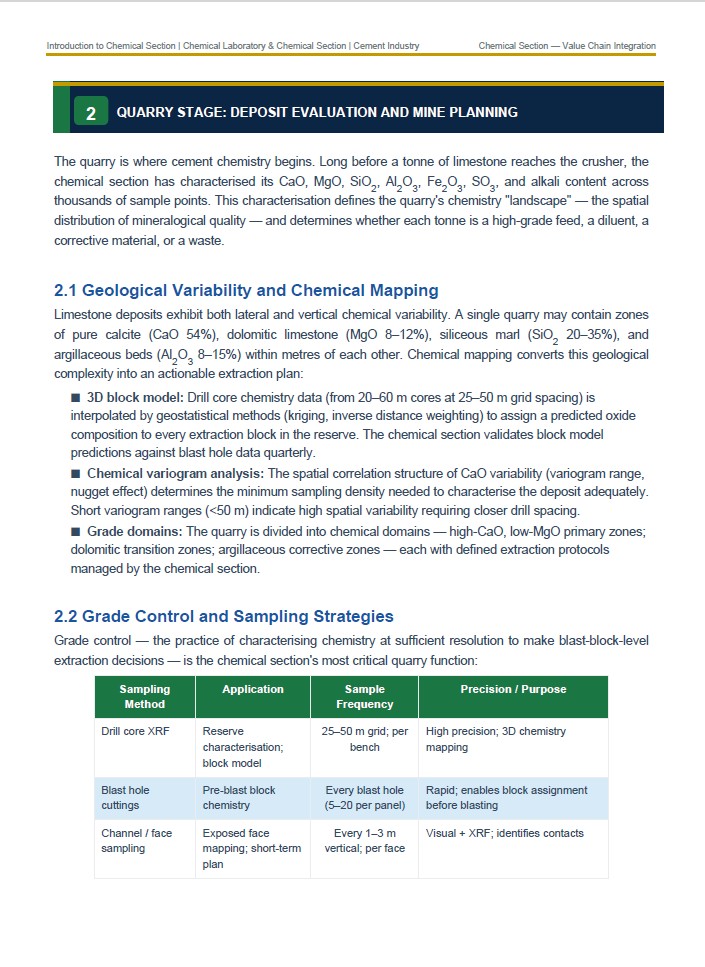
QUARRY STAGE: DEPOSIT EVALUATION AND MINE PLANNING
Key Concepts
Chemistry controls the process — it is the main driver of clinker quality.
Raw mix design is critical — correct proportions define final output.
Three key moduli: LSF, SM, AM — must be balanced together.
Clinker forms in stages — driven by temperature and reactions in the kiln.
Mass transfer matters — controls reaction efficiency and clinker formation.
Key control parameters: f-CaO, LOI, SM, LSF, AM.
Volatile cycles impact operation — can cause rings and blockages.
Preheater improves efficiency — monitored through chemical indicators.
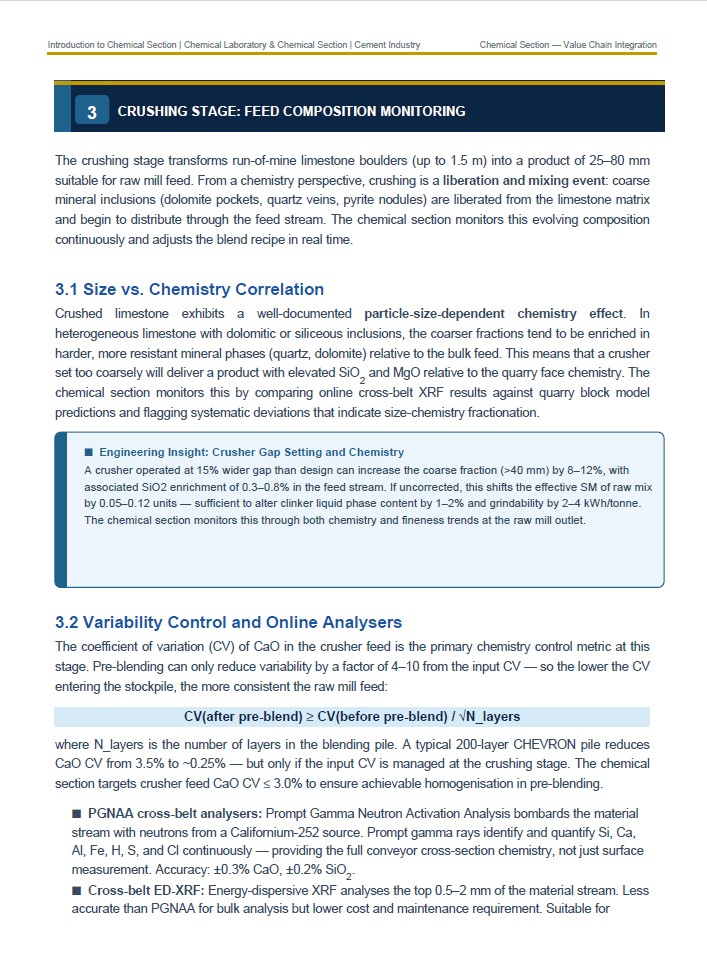
CRUSHING STAGE: FEED COMPOSITION MONITORING
PRE-HOMOGENISATION: STACKING AND RECLAIMING GUIDANCE
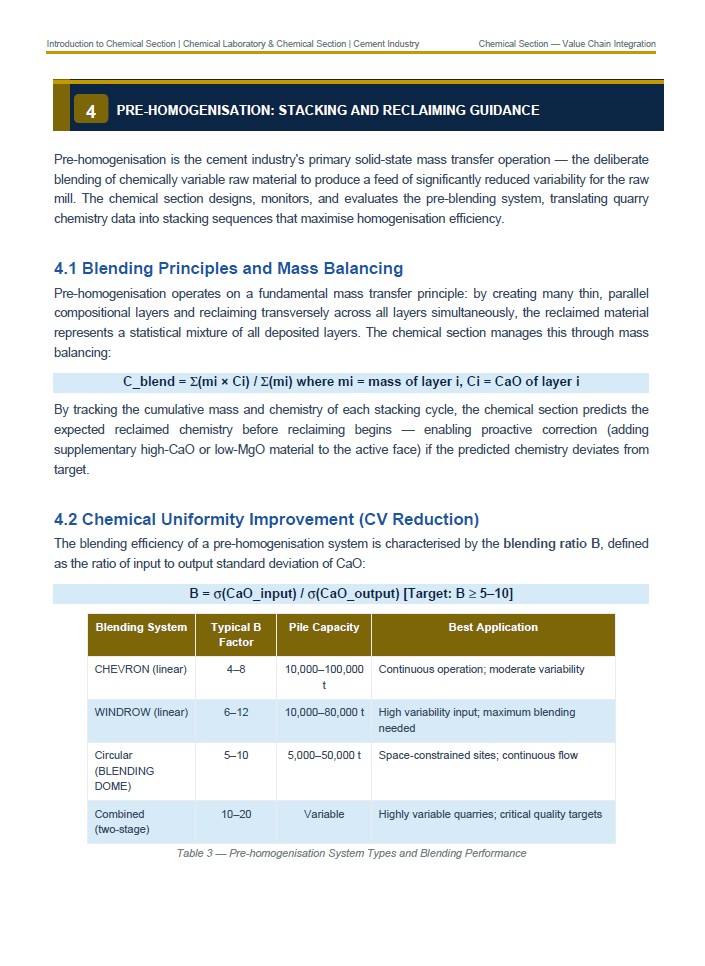
RAW MILL: MIX PROPORTIONING AND FINENESS CONTROL
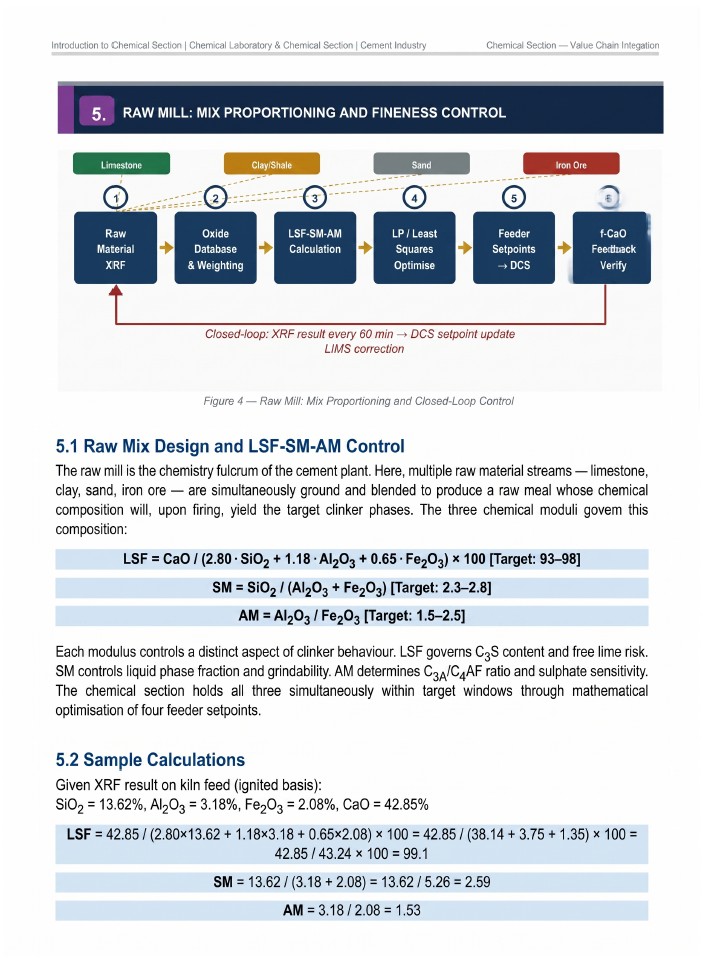
BLENDING SILO: HOMOGENEITY VERIFICATION
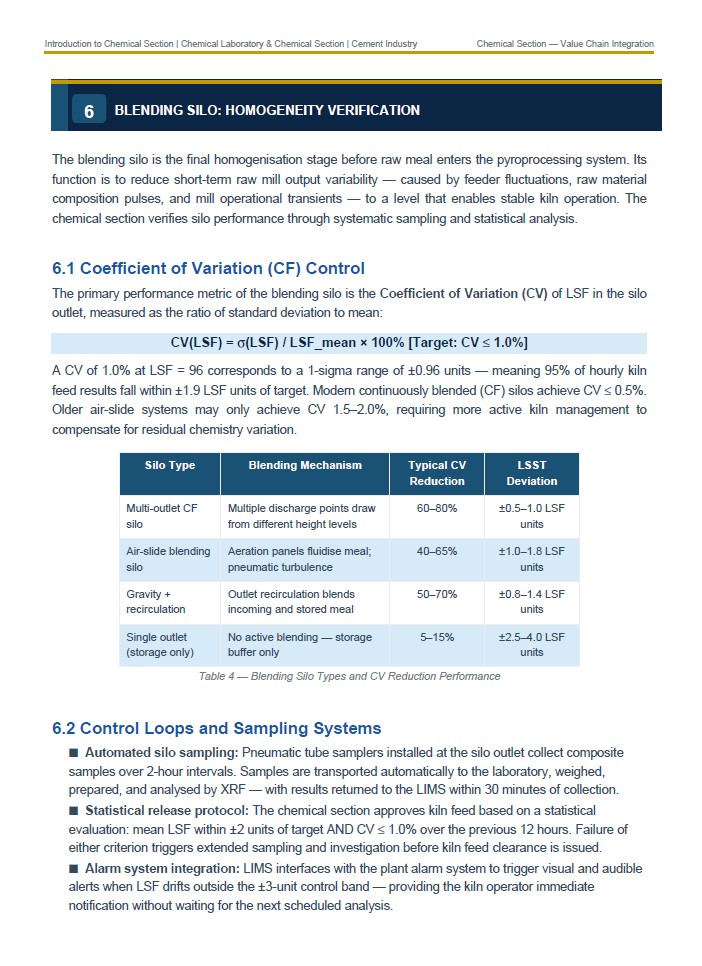
PYROPROCESSING: KILN CHEMISTRY AND CLINKER FORMATION
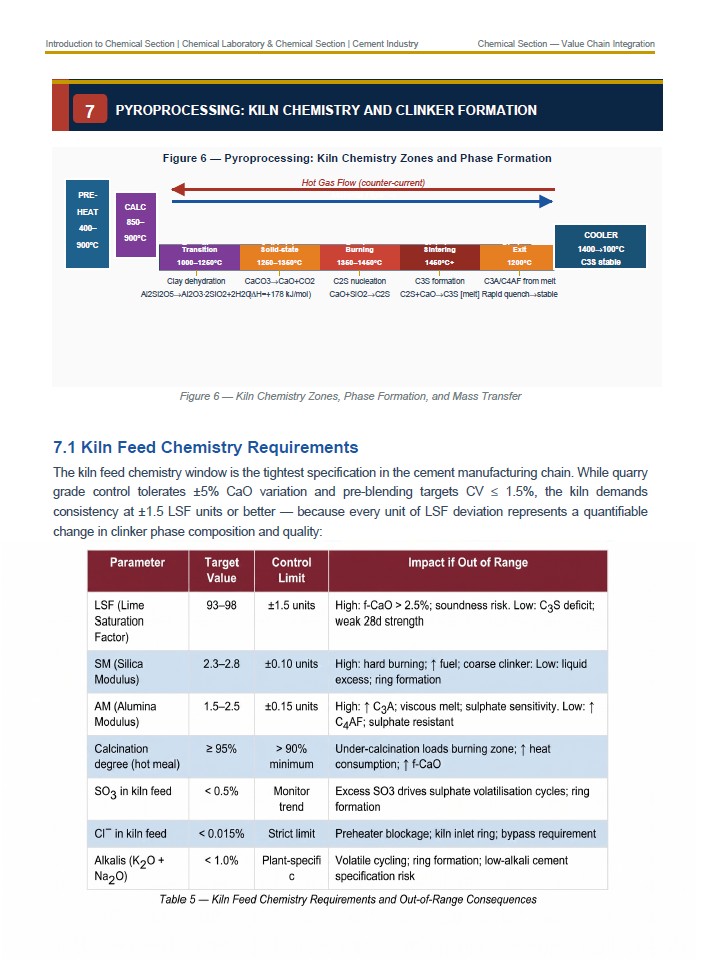
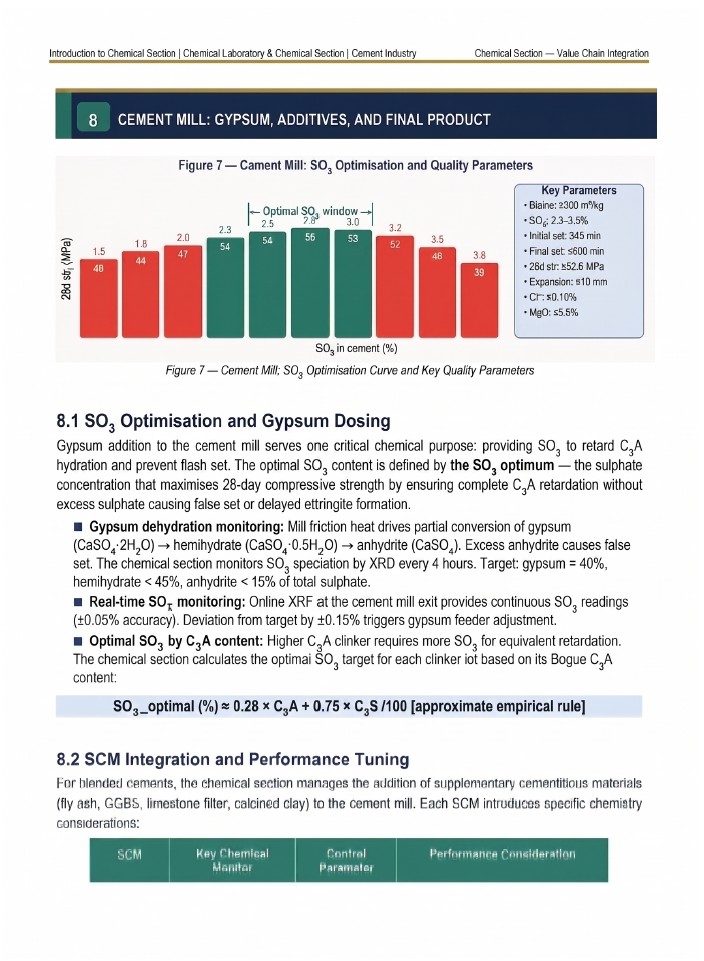
CEMENT MILL: GYPSUM, ADDITIVES, AND FINAL PRODUCT
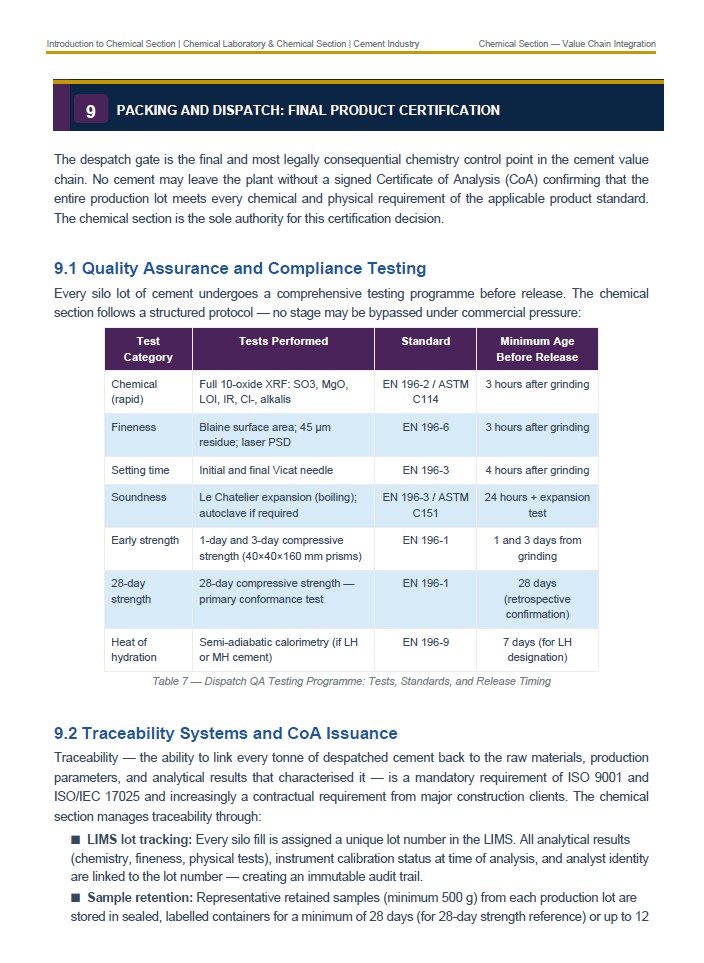
PACKING AND DISPATCH: FINAL PRODUCT CERTIFICATION
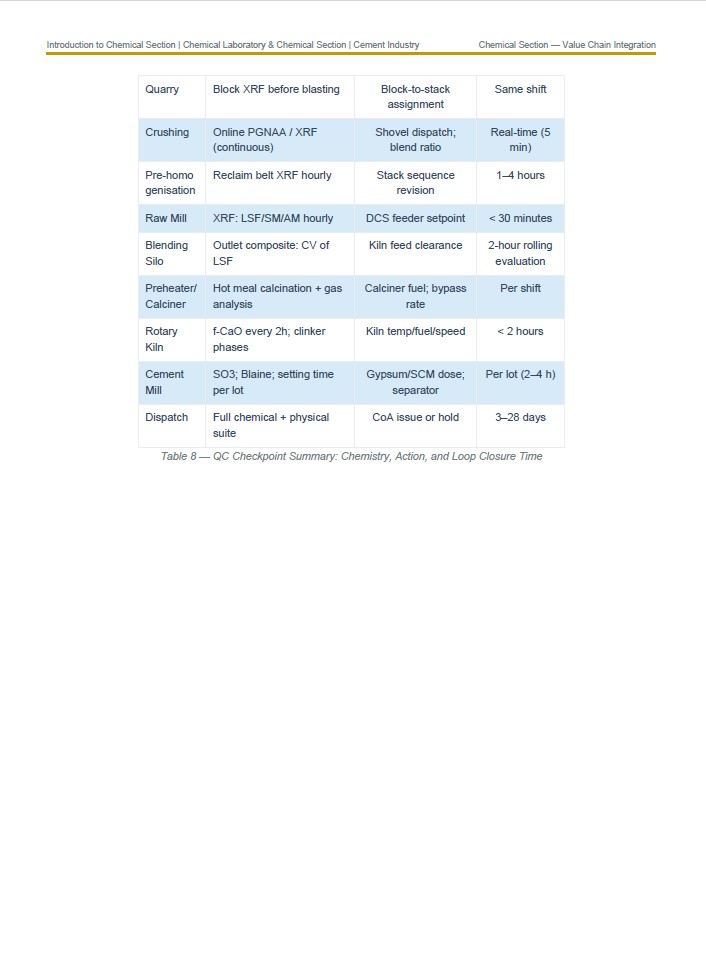
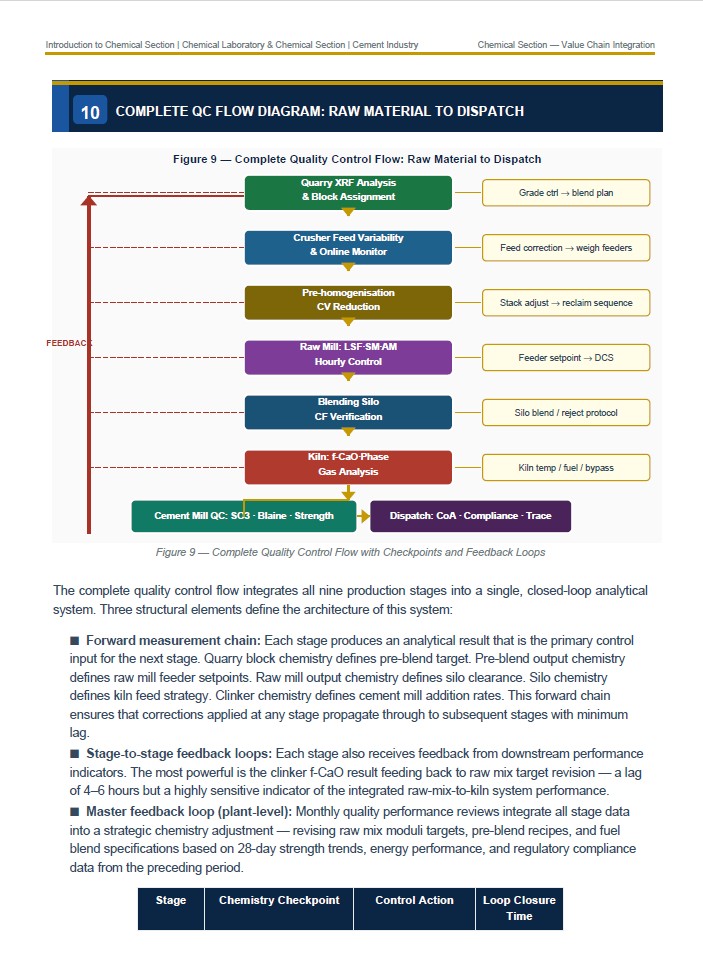
COMPLETE QC FLOW DIAGRAM: RAW MATERIAL TO DISPATCH
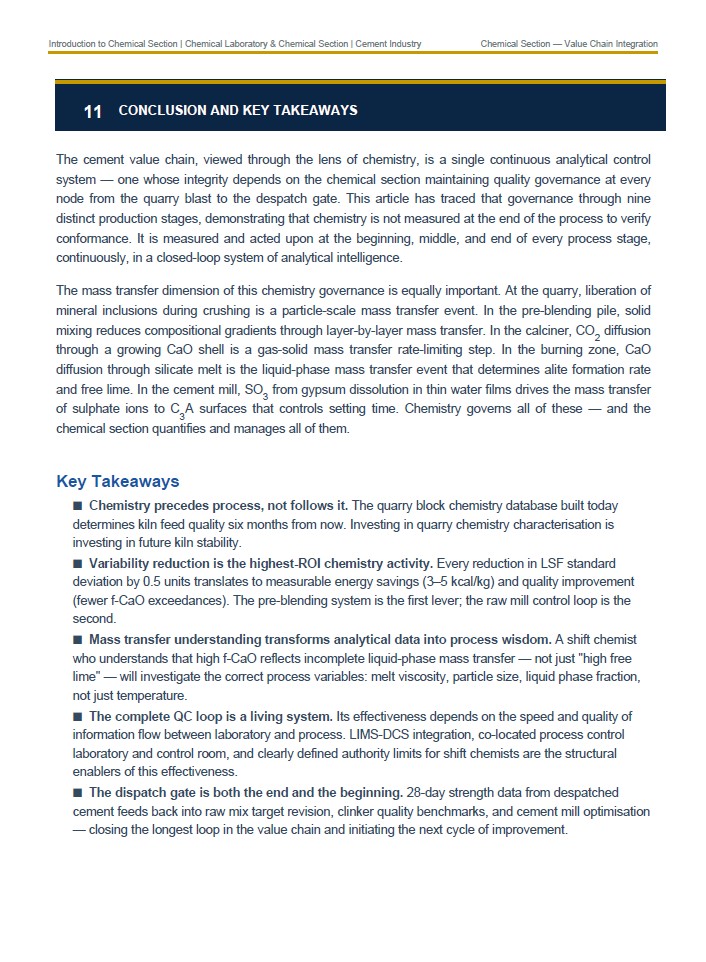
CONCLUSION AND KEY TAKEAWAYS