Conveying System - High-Speed Logistics
The Arteries of Production

Conveying Systems

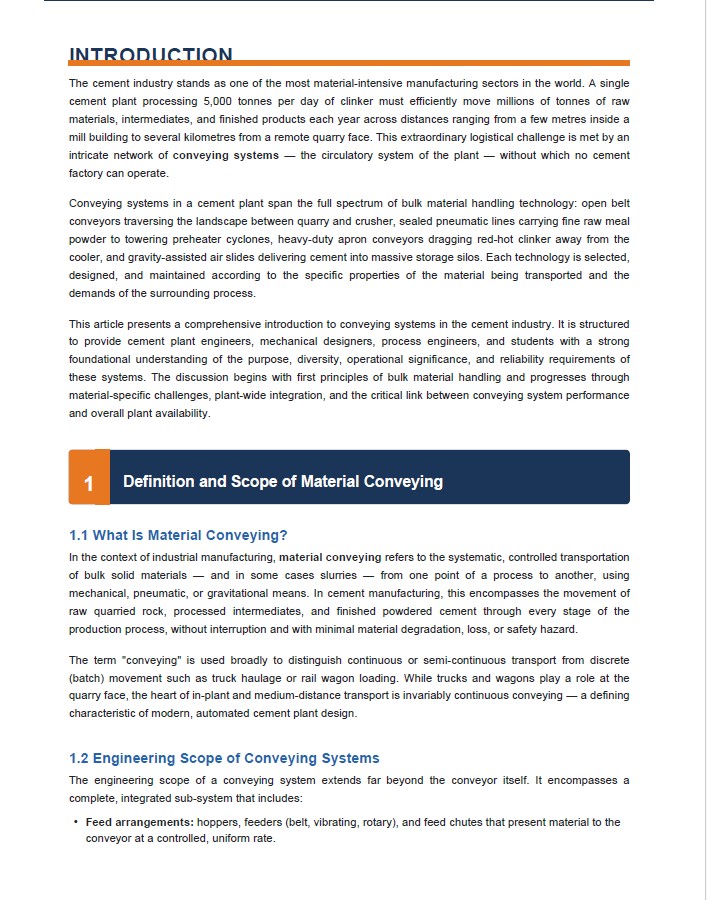
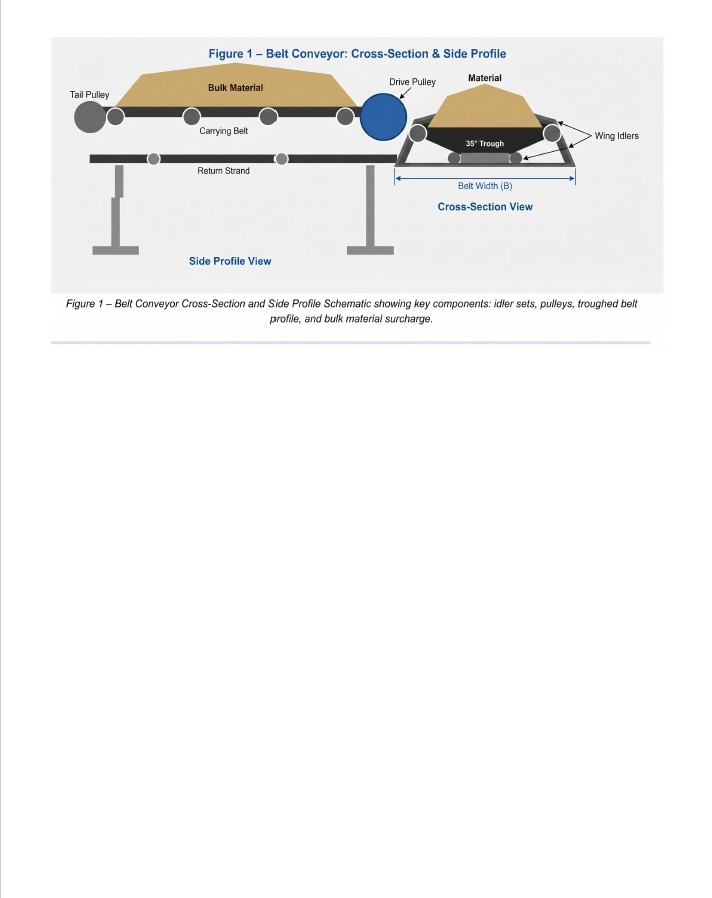
From the primary crusher to final dispatch, continuous logistics define plant efficiency. Master the mechanics of miles of high-tension belting, bucket elevators, and high-velocity pneumatics. Monitor flow rates, diagnose alignment drift, and ensure the unbroken heartbeat of the plant.

Overview of Chemical Section in Cement Industry

1
2
3
4
5

Key Concepts

  • Evolution of cement laboratory practices from manual to advanced systems

  • Role of wet chemistry methods (gravimetric & titrimetric) in early analysis

  • Limitations of traditional methods: time-consuming and less real-time control

  • Impact of instrumental analysis (XRF, AAS) on speed, accuracy, and reliability

  • Shift towards real-time process monitoring with online and at-line analyzers

  • Importance of continuous data flow between laboratory and plant operations

  • Role of automation and robotics in reducing human error and improving consistency

  • Integration of digital systems (LIMS, DCS) for centralized data management

  • Concept of real-time quality control and process optimization

  • Emergence of AI and predictive models for quality forecasting and decision-making

  • Transition from reactive testing to proactive process control

  • How lab evolution improves process stability, efficiency, and product quality

6
7
8
9

Key Concepts: 

– Importance of laboratory safety in ensuring safe and uninterrupted cement plant operations

– Understanding of chemical hazards (acids, alkalis, solvents) and safe handling practices

– Awareness of fire risks from furnaces and flammable materials, and preventive measures

– Importance of electrical safety for laboratory instruments and equipment

– Role and proper use of Personal Protective Equipment (PPE)

– Understanding and use of Safety Data Sheets (SDS) for hazard identification and handling

– Basics of first aid response for chemical exposure, burns, and injuries

– Knowledge of emergency procedures for spills, fire, and accidents

– Importance of proper chemical waste disposal and environmental compliance

– Concept of safety audits and checklists for continuous monitoring and improvement

– Building a safety culture within the laboratory environment

– Link between safety practices and accuracy, reliability, and efficiency of lab operations

10
11
12
13

Key Concepts :

– Importance of applicable international standards in cement chemical testing

– Role of standards in ensuring accuracy, consistency, and global acceptance of results

– Understanding of ASTM C114 for chemical analysis of hydraulic cement

– Overview of EN 196-2 and its methodology for cement testing

– Significance of IS 4032 in the Indian cement industry

– Awareness of other global standards: DIN (Germany), JIS (Japan), GB (China)

– Differences and similarities between various international testing standards

– Importance of standardized procedures for reproducibility of results

– Role of standards in quality control, certification, and compliance

– Understanding of laboratory best practices aligned with global norms

– Contribution of standards to process optimization and product quality consistency

– Need for harmonization in global cement testing practices

14
15
16

Key Concepts

– Importance of laboratory environmental conditions in ensuring accurate test results

– Role of temperature and humidity control in maintaining consistency and instrument stability

– Need for vibration-free setup for precise measurements (balances, XRF, etc.)

– Importance of a dust-free environment in cement labs to avoid contamination errors

– Function of proper ventilation and fume extraction systems for safety and efficiency

– Impact of adequate lighting on precision and operator performance

– Role of stable power supply (UPS & voltage control) in preventing data loss and equipment damage

– Importance of compressed gases (Argon, Helium, Nitrogen) in analytical processes

– Use of different water types (distilled, deionized, tap) for various lab operations

– Need for proper drainage and chemical waste handling systems

– Link between environmental control and data accuracy, repeatability, and reliability

– Contribution of lab conditions to overall process control and cement quality consistency

More Topics Coming Soon.....