Environmental Engineering
Sustainable solutions for the cement industry.
Emission control, dust management, waste heat recovery & greener operations.
In-depth Environmental Engineering knowledge tailored for cement plants — air pollution control, baghouse & ESP design, wastewater treatment, CO₂ reduction strategies, noise control, and environmental compliance.
Chapter 1: The Cement Industry and Its Footprint Environmental Footprint
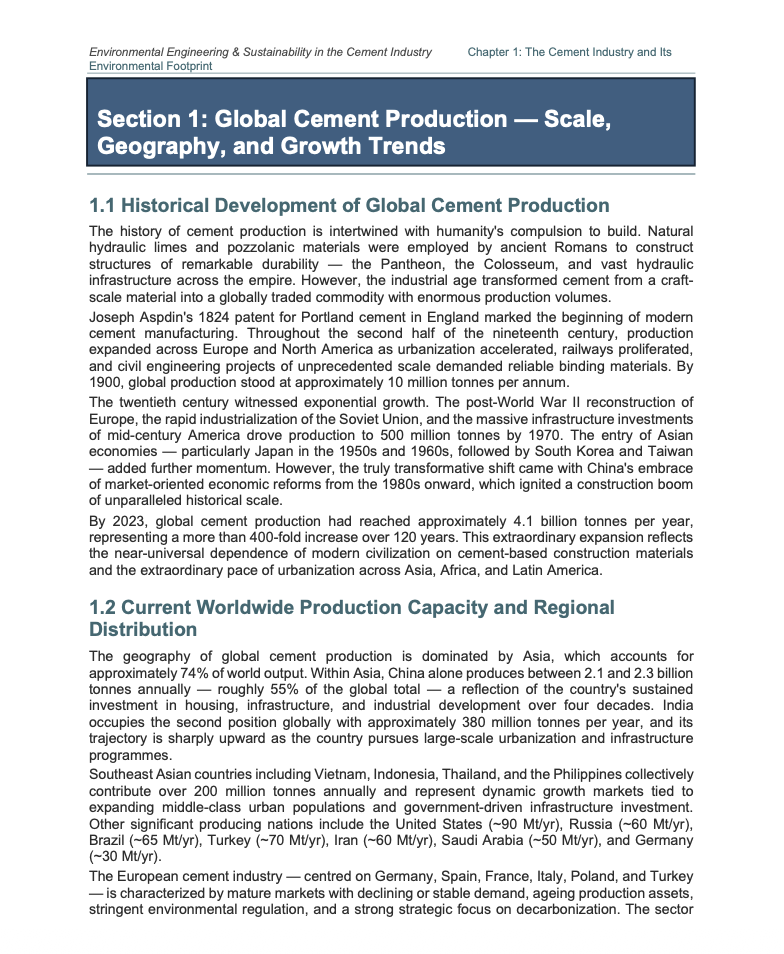
Section 1: Global Cement Production — Scale, Geography, and Growth Trends Geography, and Growth Trends
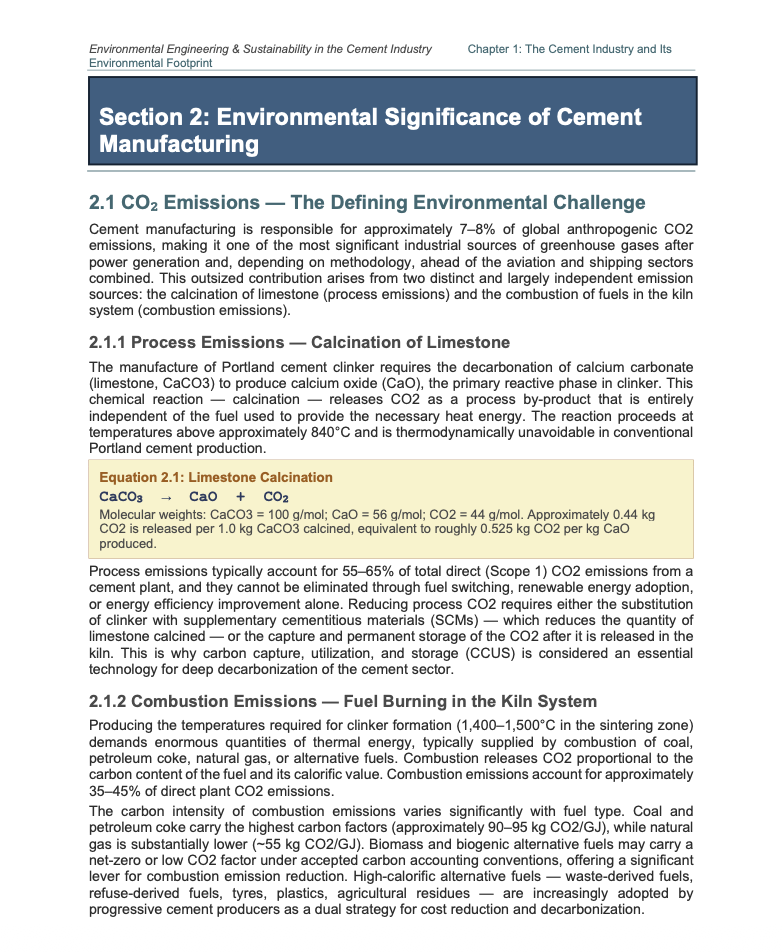
Section 2: Environmental Significance of Cement Manufacturing Manufacturing
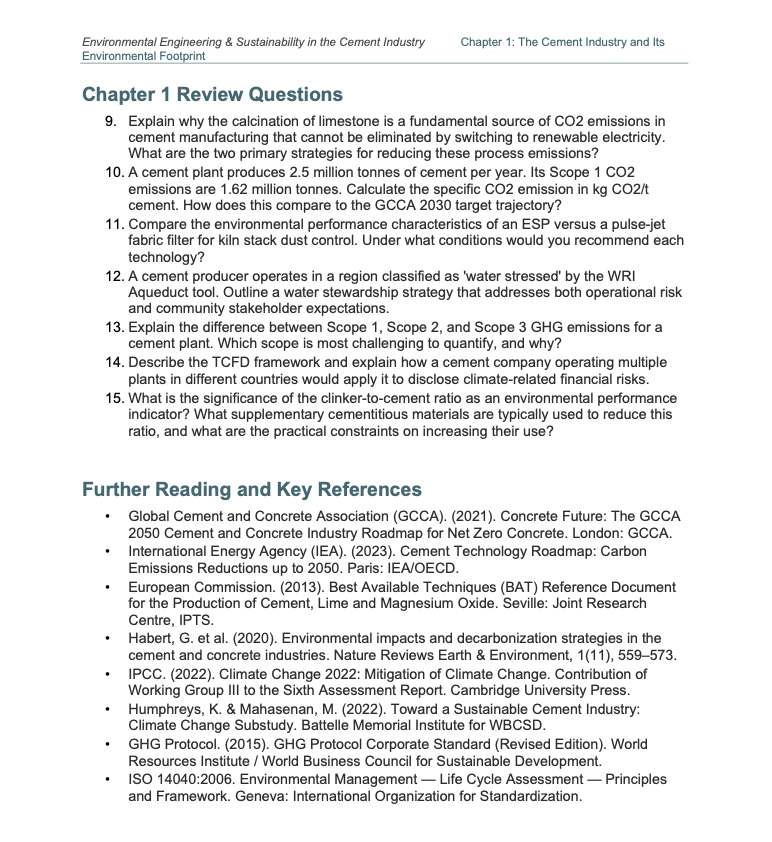
Key Concepts
Evolution of cement laboratory practices from manual to advanced systems
Role of wet chemistry methods (gravimetric & titrimetric) in early analysis
Limitations of traditional methods: time-consuming and less real-time control
Impact of instrumental analysis (XRF, AAS) on speed, accuracy, and reliability
Shift towards real-time process monitoring with online and at-line analyzers
Importance of continuous data flow between laboratory and plant operations
Role of automation and robotics in reducing human error and improving consistency
Integration of digital systems (LIMS, DCS) for centralized data management
Concept of real-time quality control and process optimization
Emergence of AI and predictive models for quality forecasting and decision-making
Transition from reactive testing to proactive process control
How lab evolution improves process stability, efficiency, and product quality
Section 3: Key Environmental Impact Categories
Key Concepts:
– Importance of laboratory safety in ensuring safe and uninterrupted cement plant operations
– Understanding of chemical hazards (acids, alkalis, solvents) and safe handling practices
– Awareness of fire risks from furnaces and flammable materials, and preventive measures
– Importance of electrical safety for laboratory instruments and equipment
– Role and proper use of Personal Protective Equipment (PPE)
– Understanding and use of Safety Data Sheets (SDS) for hazard identification and handling
– Basics of first aid response for chemical exposure, burns, and injuries
– Knowledge of emergency procedures for spills, fire, and accidents
– Importance of proper chemical waste disposal and environmental compliance
– Concept of safety audits and checklists for continuous monitoring and improvement
– Building a safety culture within the laboratory environment
– Link between safety practices and accuracy, reliability, and efficiency of lab operations
Section 4: Life-Cycle Perspective — Quarry to End- Life Concrete of-Life Concrete
Key Concepts :
– Importance of applicable international standards in cement chemical testing
– Role of standards in ensuring accuracy, consistency, and global acceptance of results
– Understanding of ASTM C114 for chemical analysis of hydraulic cement
– Overview of EN 196-2 and its methodology for cement testing
– Significance of IS 4032 in the Indian cement industry
– Awareness of other global standards: DIN (Germany), JIS (Japan), GB (China)
– Differences and similarities between various international testing standards
– Importance of standardized procedures for reproducibility of results
– Role of standards in quality control, certification, and compliance
– Understanding of laboratory best practices aligned with global norms
– Contribution of standards to process optimization and product quality consistency
– Need for harmonization in global cement testing practices
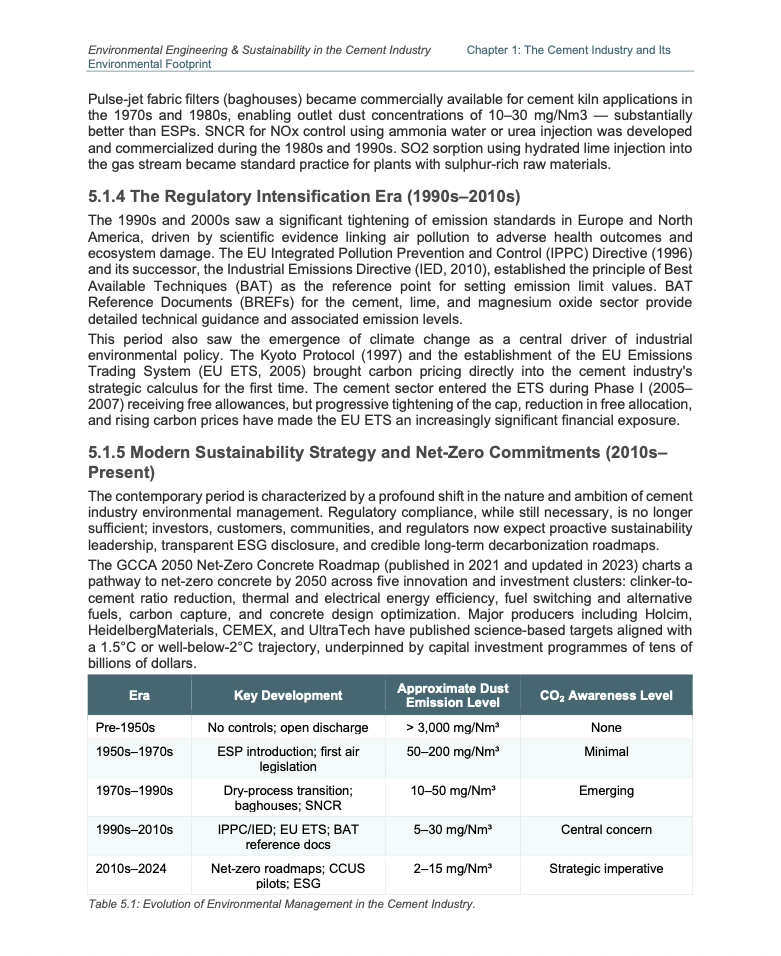
Section 5: Historical Evolution of Environmental Management in Cement Manufacturing Management in Cement Manufacturing
Key Concepts
– Importance of laboratory environmental conditions in ensuring accurate test results
– Role of temperature and humidity control in maintaining consistency and instrument stability
– Need for vibration-free setup for precise measurements (balances, XRF, etc.)
– Importance of a dust-free environment in cement labs to avoid contamination errors
– Function of proper ventilation and fume extraction systems for safety and efficiency
– Impact of adequate lighting on precision and operator performance
– Role of stable power supply (UPS & voltage control) in preventing data loss and equipment damage
– Importance of compressed gases (Argon, Helium, Nitrogen) in analytical processes
– Use of different water types (distilled, deionized, tap) for various lab operations
– Need for proper drainage and chemical waste handling systems
– Link between environmental control and data accuracy, repeatability, and reliability
– Contribution of lab conditions to overall process control and cement quality consistency
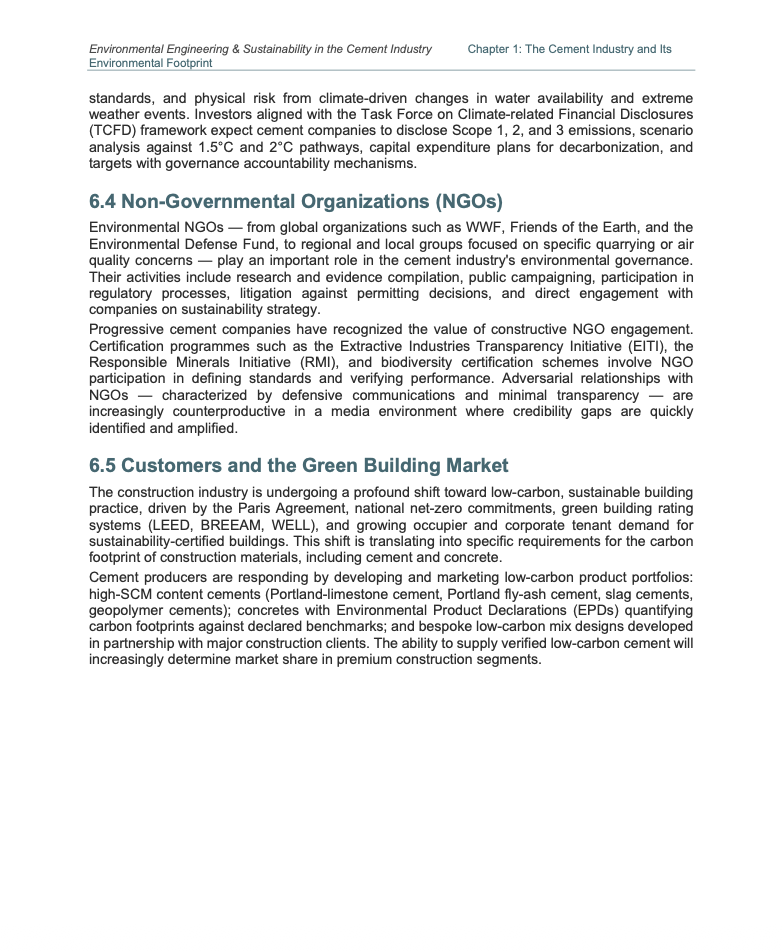
Section 6: Stakeholder Landscape in the Cement Industry Industry
Key Concepts
– Importance of laboratory environmental conditions in ensuring accurate test results
– Role of temperature and humidity control in maintaining consistency and instrument stability
– Need for vibration-free setup for precise measurements (balances, XRF, etc.)
– Importance of a dust-free environment in cement labs to avoid contamination errors
– Function of proper ventilation and fume extraction systems for safety and efficiency
– Impact of adequate lighting on precision and operator performance
– Role of stable power supply (UPS & voltage control) in preventing data loss and equipment damage
– Importance of compressed gases (Argon, Helium, Nitrogen) in analytical processes
– Use of different water types (distilled, deionized, tap) for various lab operations
– Need for proper drainage and chemical waste handling systems
– Link between environmental control and data accuracy, repeatability, and reliability
– Contribution of lab conditions to overall process control and cement quality consistency
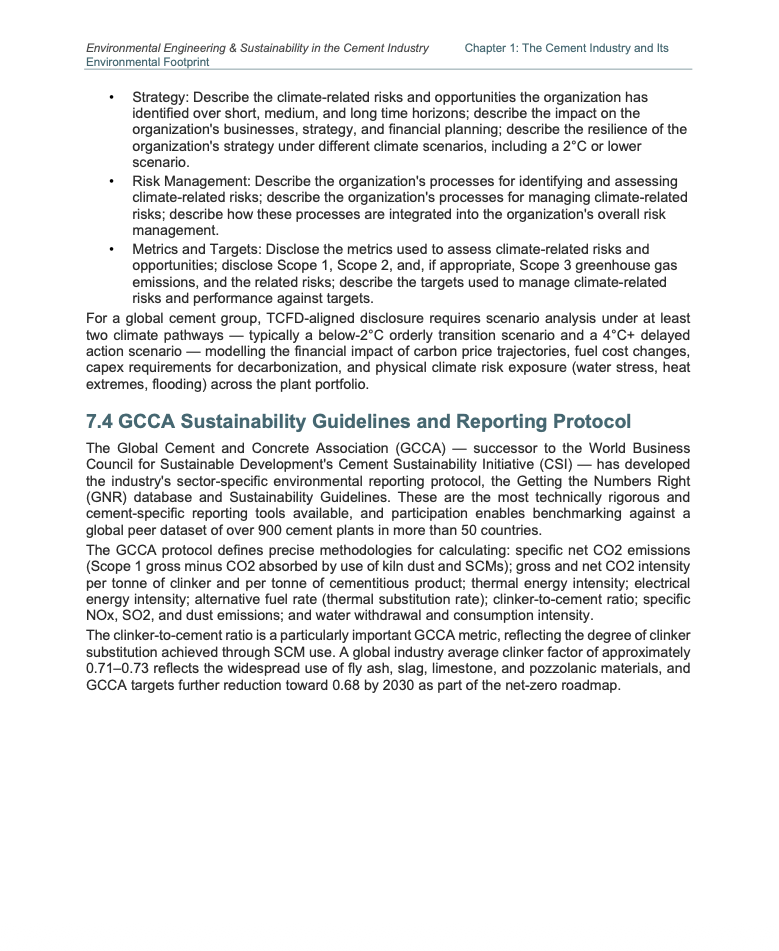
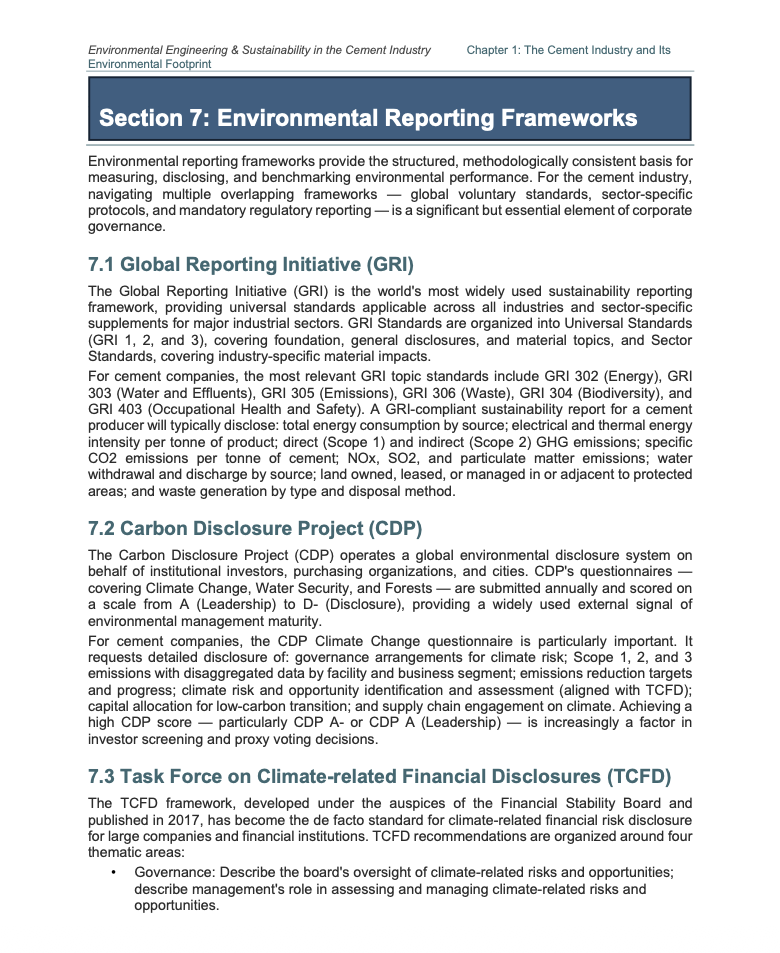
Section 7: Environmental Reporting Frameworks
Key Concepts
– Importance of laboratory environmental conditions in ensuring accurate test results
– Role of temperature and humidity control in maintaining consistency and instrument stability
– Need for vibration-free setup for precise measurements (balances, XRF, etc.)
– Importance of a dust-free environment in cement labs to avoid contamination errors
– Function of proper ventilation and fume extraction systems for safety and efficiency
– Impact of adequate lighting on precision and operator performance
– Role of stable power supply (UPS & voltage control) in preventing data loss and equipment damage
– Importance of compressed gases (Argon, Helium, Nitrogen) in analytical processes
– Use of different water types (distilled, deionized, tap) for various lab operations
– Need for proper drainage and chemical waste handling systems
– Link between environmental control and data accuracy, repeatability, and reliability
– Contribution of lab conditions to overall process control and cement quality consistency
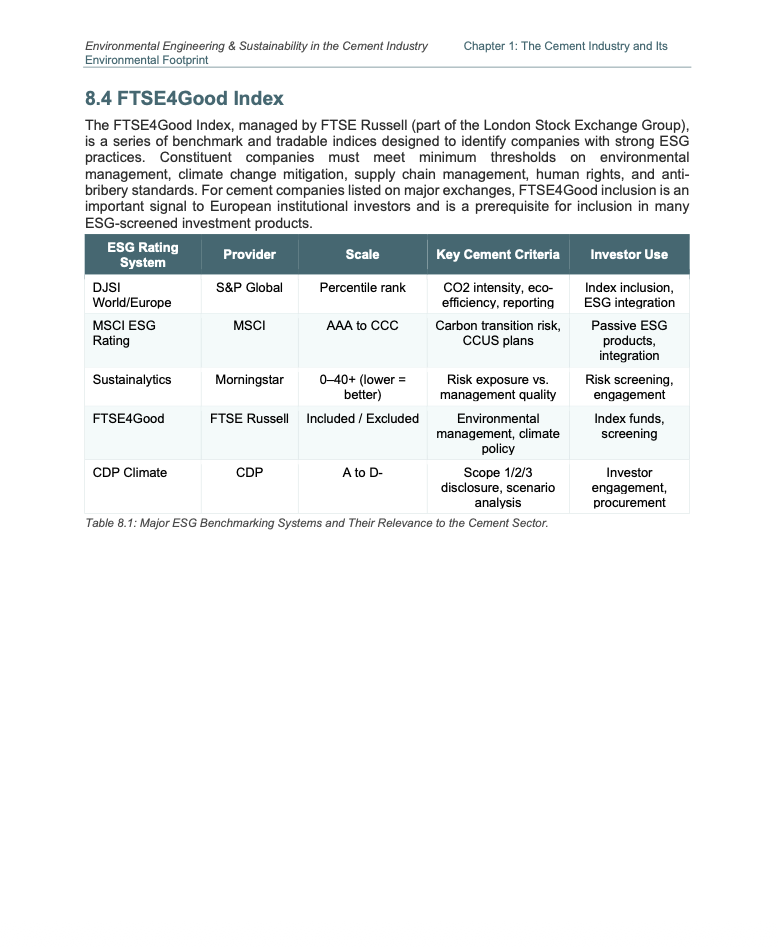
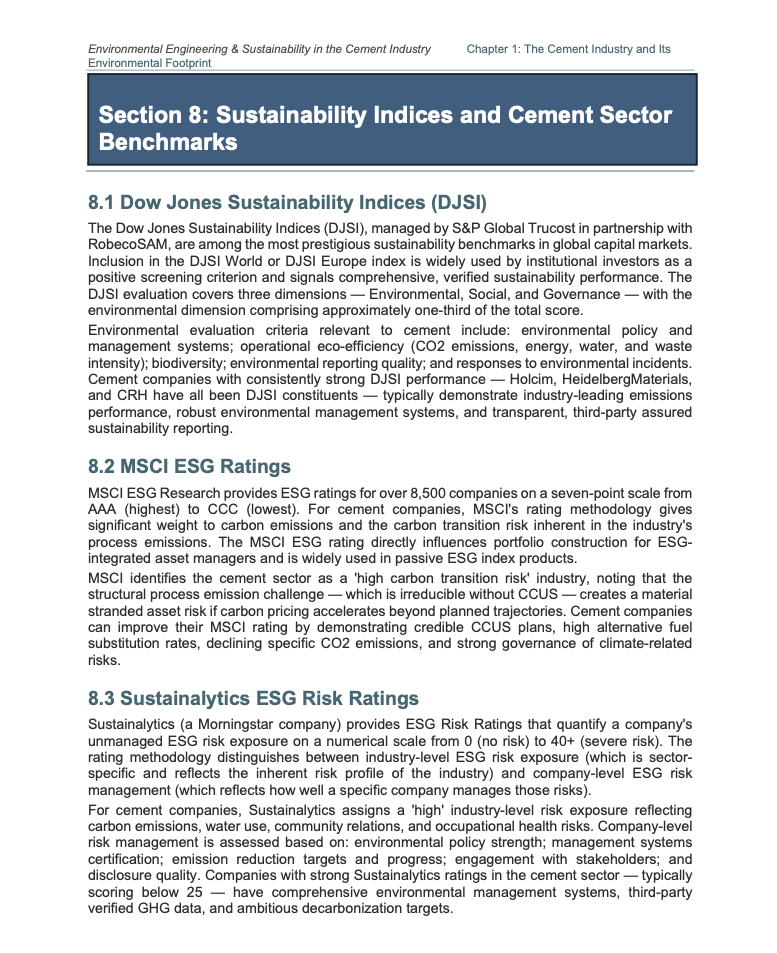
Section 8: Sustainability Indices and Cement Sector Benchmarks Benchmarks
Key Concepts
– Importance of laboratory environmental conditions in ensuring accurate test results
– Role of temperature and humidity control in maintaining consistency and instrument stability
– Need for vibration-free setup for precise measurements (balances, XRF, etc.)
– Importance of a dust-free environment in cement labs to avoid contamination errors
– Function of proper ventilation and fume extraction systems for safety and efficiency
– Impact of adequate lighting on precision and operator performance
– Role of stable power supply (UPS & voltage control) in preventing data loss and equipment damage
– Importance of compressed gases (Argon, Helium, Nitrogen) in analytical processes
– Use of different water types (distilled, deionized, tap) for various lab operations
– Need for proper drainage and chemical waste handling systems
– Link between environmental control and data accuracy, repeatability, and reliability
– Contribution of lab conditions to overall process control and cement quality consistency
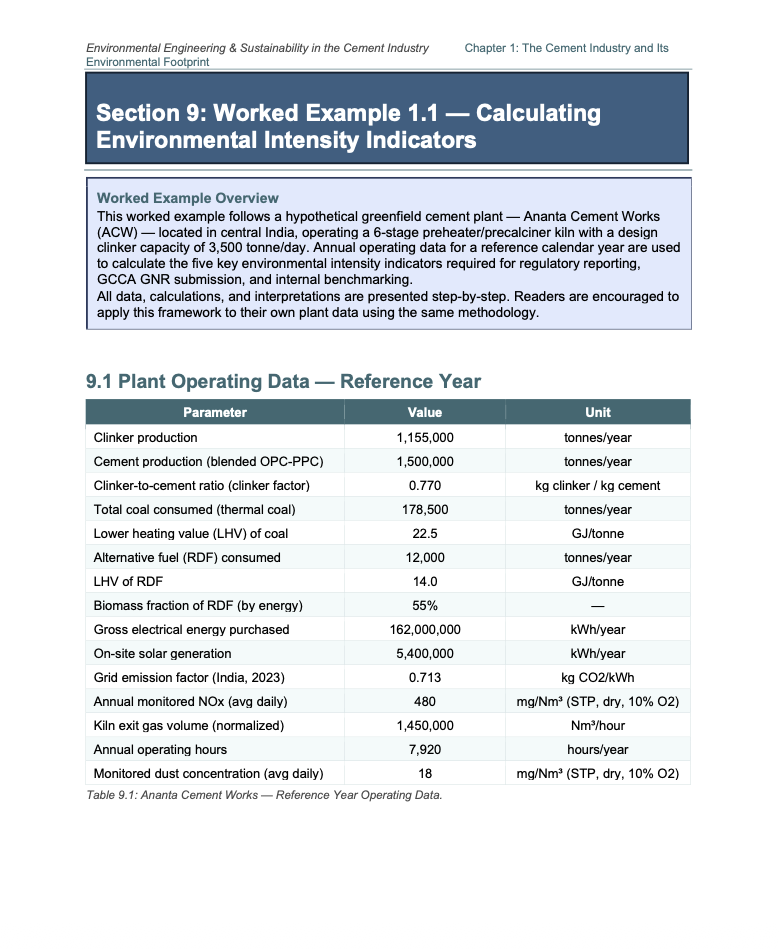
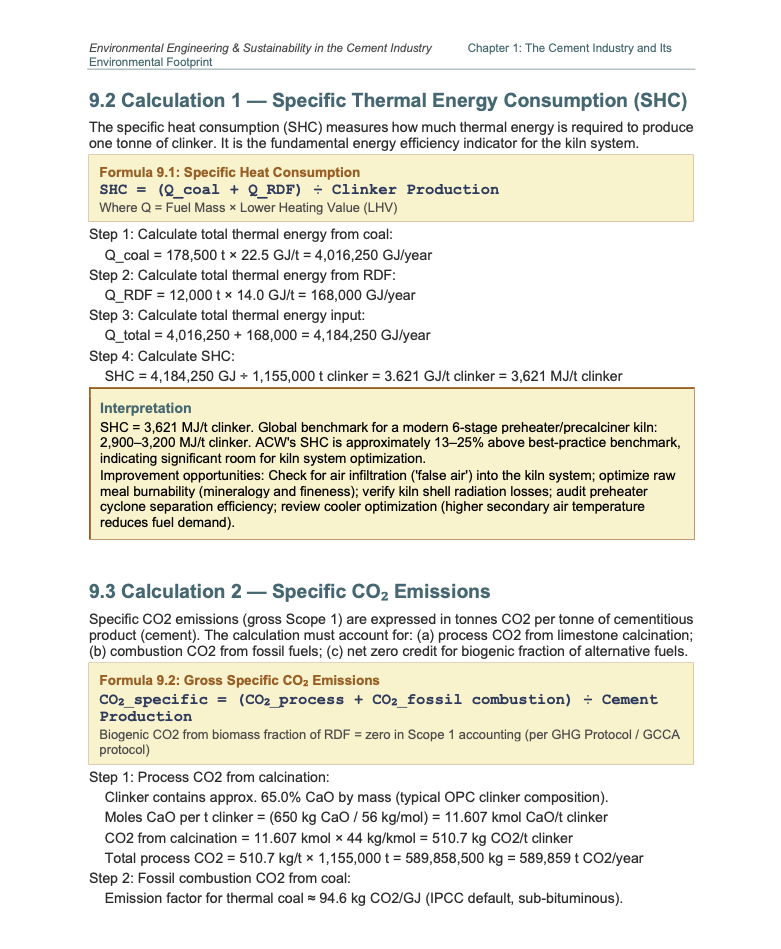
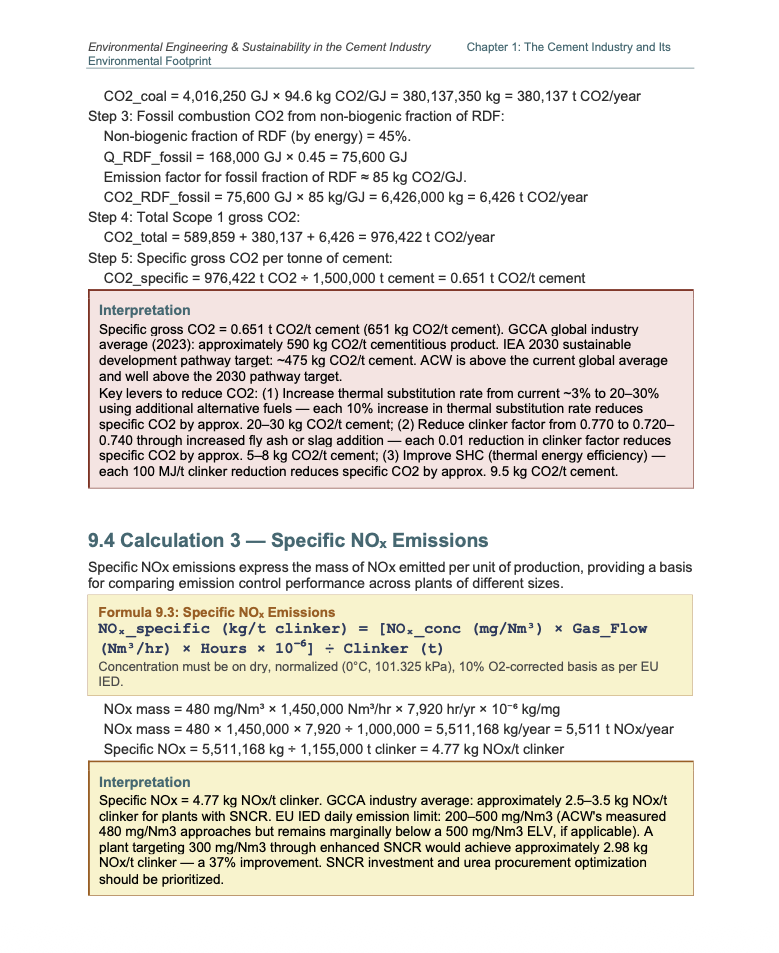
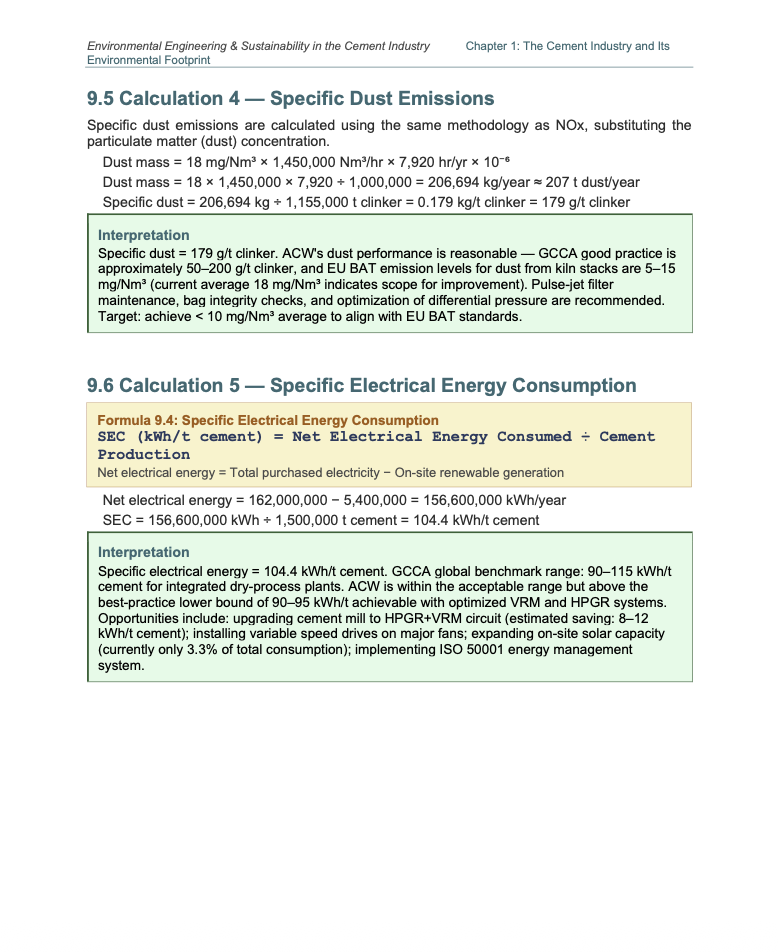
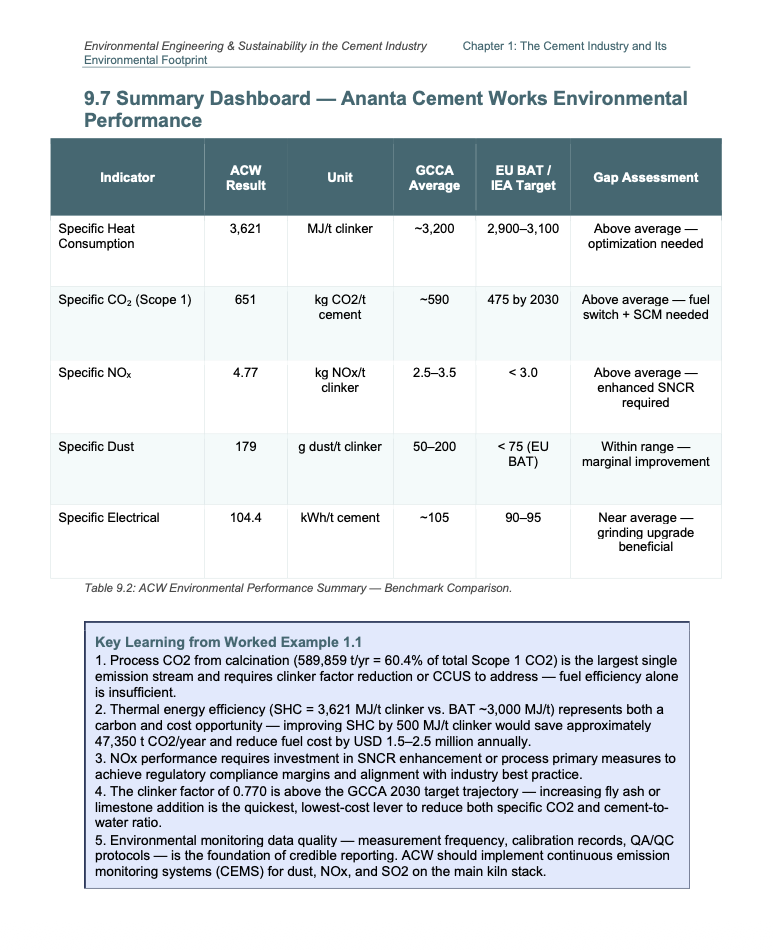
Section 9: Worked Example 1.1 — Calculating Environmental Intensity Indicators Environmental Intensity Indicators